Back in the (new) saddle
Over the last decade, I have become what most people would call a confident rider. On the outside, there is a certain fluidity and ease. With Luna, I know the nuances of her moods; I can tell when she wants a leisurely graze and when she is a "rocket ship" ready to propel into the great unknown. With Alegria, the confidence is absolute. We have a history that allows us to gallop along the beach even as her four-month-old colt, Señor Sol, frolics beside us. In those moments, I am supported by my Vaquera saddle—a traditional style with what I call "seatbelts": high shoulders that hold my thighs in place and closed stirrups that protect my feet. It is a known world. It is a secure seat.
But a few months ago, I got a new saddle for Fortuna. It is a Tejana style. My old saddle was simply too heavy for me to lift onto a horse as tall as she is, and it didn’t fit her frame correctly. I thought the new saddle would be a simple solution to a logistical problem. I didn’t realize how much I had molded my very way of being—my posture, my balance, my sense of safety—to the "shoulders" of that old world.
The first time I tried to gallop Fortuna in the Tejana, I felt like I was going to fall right out. The seatbelts were gone. The stirrups, no longer stiff and enclosed, swung freely. Suddenly, I was humbled. I felt like a complete beginner again.
There is a certain shame in that feeling. Even after a decade of riding, I realized that inside, I still carry the timid, scared rider I was when I first started. I didn't want anyone to know that I wasn't all I appeared to be. I felt a sense of embarrassment at being "new" again, especially with Fortuna. We have only been together a year, compared to the eight years with Alegria and twelve with Luna. I was trying to force a "seat" I didn't yet have, clinging to the memory of the security I used to feel.
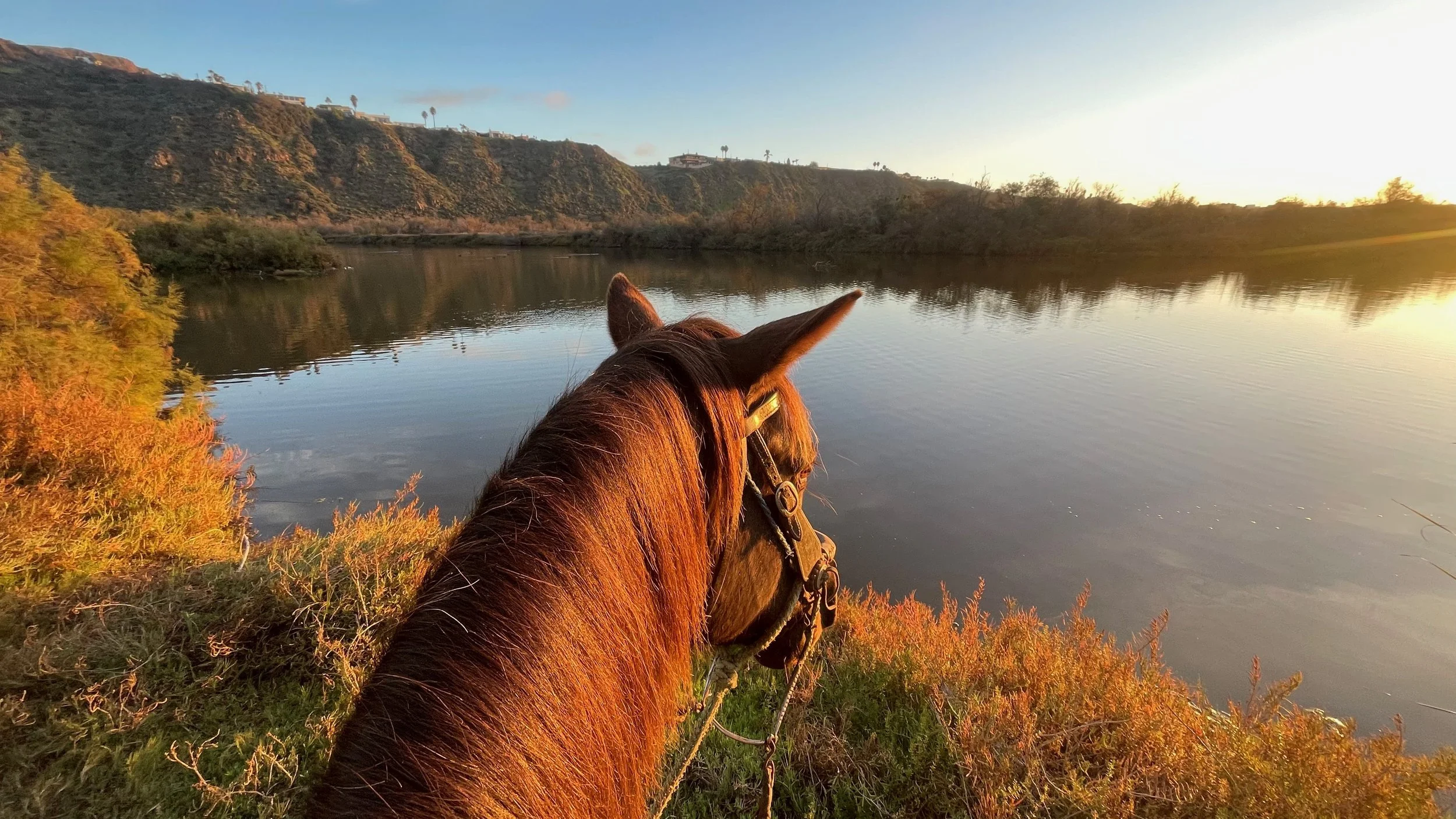
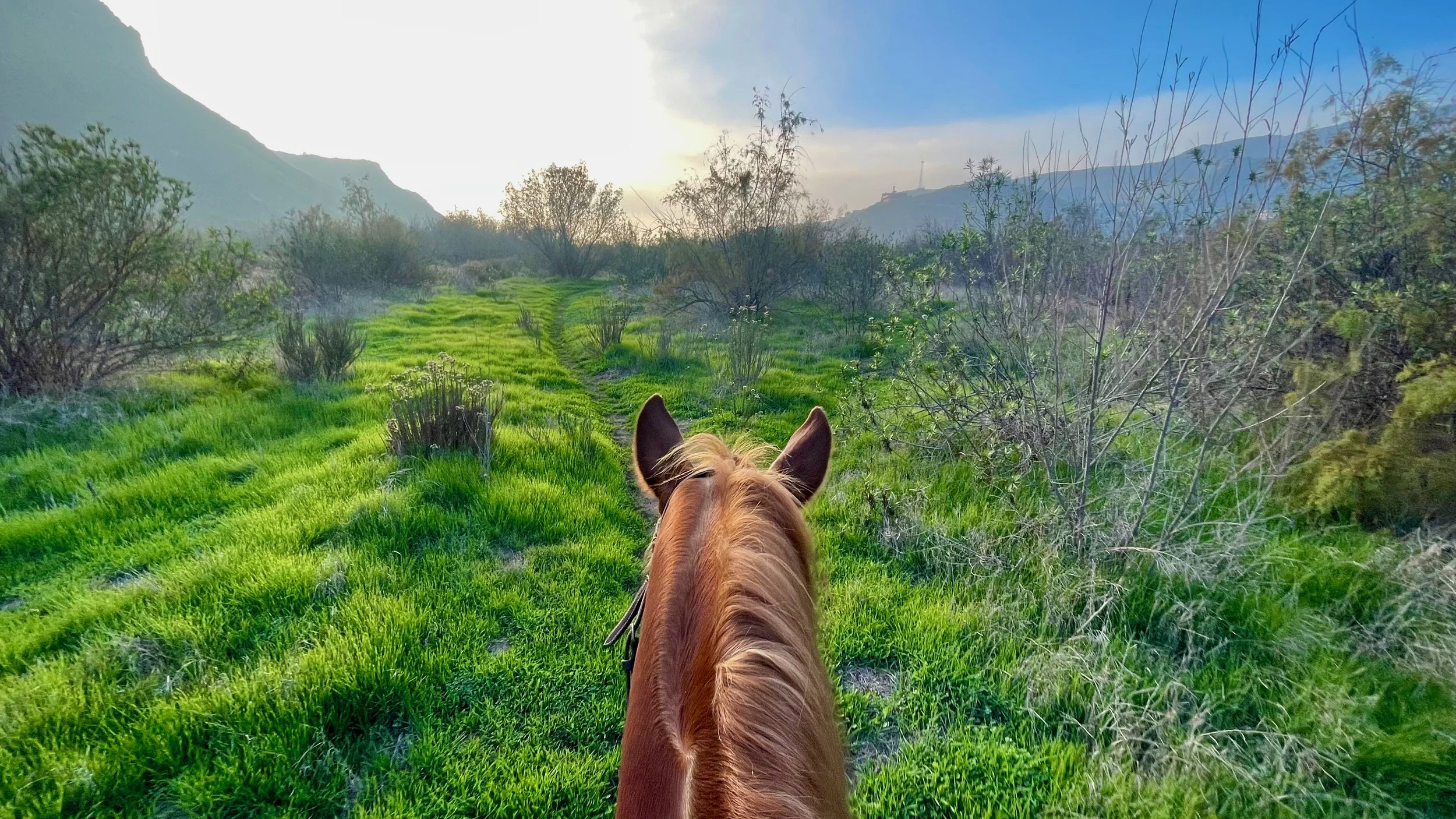
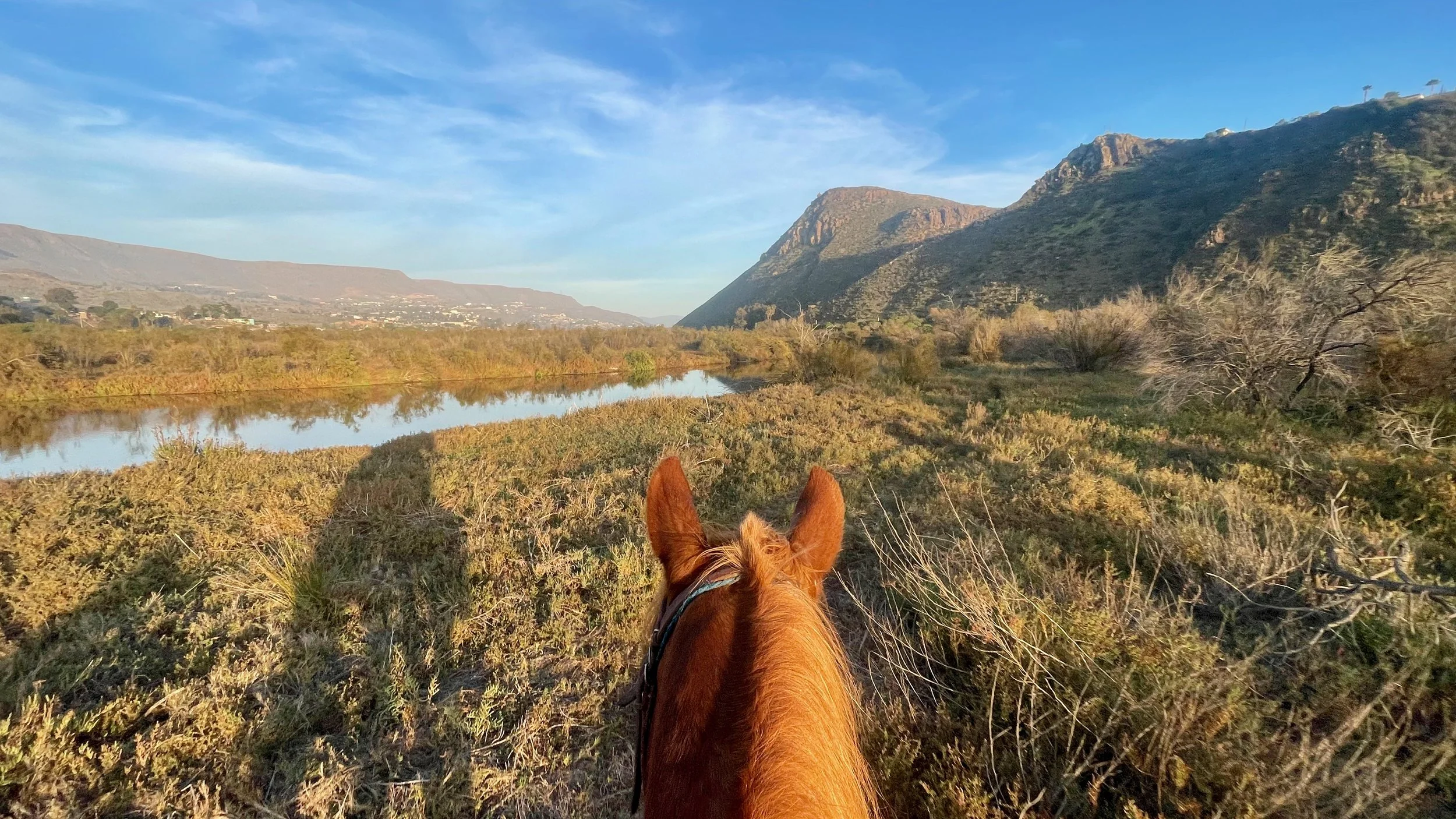
The other day, as Fortuna and I were walking through the estuary trails, I reached a breaking point. I had almost convinced myself to give up on the Tejana and find a Vaquera that fit her. I wanted to go back to what was comfortable, back to the territory where I felt like a "good rider."
Right at that moment, a thought came to me. It wasn’t a conscious calculation; it felt direct and external, as if Fortuna herself were speaking: “Take your feet out of the stirrups.” I obeyed. I let my feet dangle. Instead of feeling less secure, it actually felt more so. We continued walking, finding a rhythm together that seemed to be more direct without my feet in the stirrups.
Then came the next instruction: “Try to go faster. Into a trot.” Really? I thought. Okay…
It was a bit floppy at first, but slowly, again, we found a bit of a rhythm. Huh, I thought. What is going on here? It struck me then that Fortuna wasn't just a young horse I was supposed to be leading or teaching. She was teaching me. Not unlike the documentary My Octopus Teacher, where the filmmaker begins to realize that the octopus is the one leading him. Just as I was trying to crawl back into the safety of my old ways, Fortuna was inviting me deeper into this new way of being. Not only did I not have the "shoulders" of the saddle to hold me, but now I didn't even have my feet!
I was completely unanchored. Or was I? The irony was, in letting go of my stirrups—that which I thought gave me "security"—I actually found my seat: my own balance, my own grounding and connection with her.
Where are you leading me? I wondered.
As we continued walking through the estuary, the answer began to unfold. My "job" was simply to listen, to be present, and to be willing. A quote from the Chronicles of Narnia came to mind. Aslan is speaking to a child who thinks she is the one who called to him. Aslan says, “You would not have been calling to me unless I had been calling to you.” I had thought it was my idea to take Fortuna for a ride to practice our partnership. But somehow it seemed she was the one leading me. Could it be that my job was not to ‘lead’ but instead to be a conduit for something new seeking to be born?
Being the Christmas season, I couldn't help but think of Mary. People often get lost in the debate over details of the "virgin birth," but they miss the more universal point: The Divine seeks to be born in all of us. To take form in us, through us. To be manifest—incarnate—in us. The question is whether we are willing to allow. Are we willing to take our feet out of the stirrups? Are we willing to let go of the "seatbelts" of our control and our expertise?
To allow that birth, we have to be willing to be new again. (To be born again?) We have to be willing to be wobbly, to be taught by the very things we thought we were supposed to be in charge of. In that estuary, with my feet dangling and the wind moving past us, I realized that the true confident rider isn't the one who never feels afraid—it's the one who is willing to let go of the saddle and be led into the unknown.
If you’re interested in exploring how to "take the reins" in your own life, join us for our monthly workshop. We gather to practice the skills of presence and intentionality, learning together how to move through the world with a bit more clarity and a lot less fear.
