On Kings and Donkeys
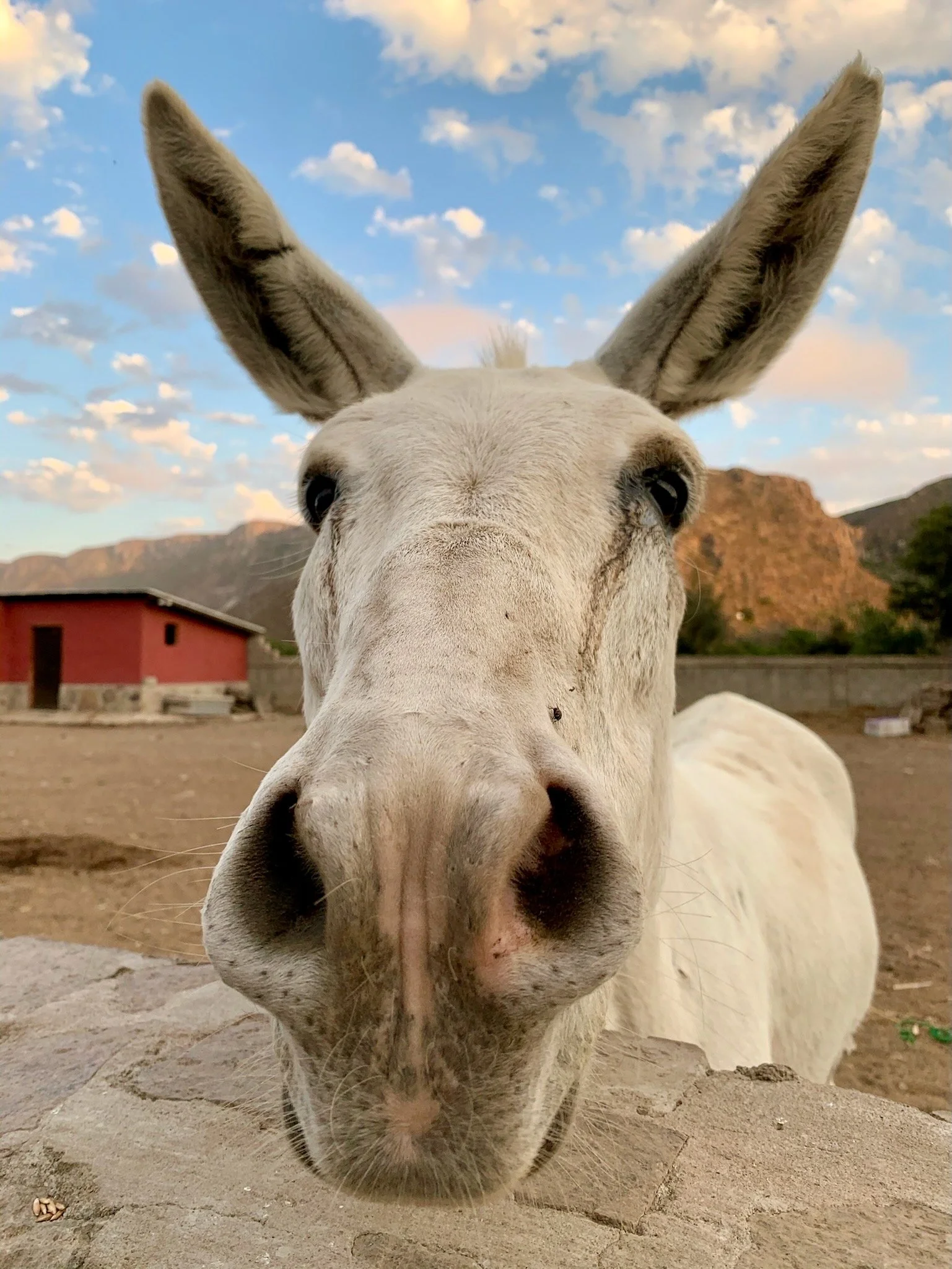
Since becoming a horsewoman, there has been something bothering me about the Palm Sunday story—and it’s probably not what you think.
If you’ve ever worked with a young horse (or a donkey), you probably already take this for granted: an animal has to be trained to be ridden. It is not something that comes naturally. In fact, it comes very unnaturally. In the wild, something on your back usually means a predator is about to enjoy you for dinner.
People often ask me about our horses here when they come to ride: When will Señor Sol be ready to be ridden? Is it like the movies where there is a lot of "breaking" and bucking broncos?
While there are still those who think "breaking" is the answer, the word in Spanish is actually manzando—taming, gentling. For us, it is a process that begins when the animal is about two years old. It is slow. It is quiet. If you do it right, there are no "theatrics." Just a simple, intentional practice to get the animal used to a rider, but also used to the unexpected—a plastic bag flying in the wind, a car driving by, a wave cresting on the shore.
There really isn’t much to see there, when it is done well. It’s strong—but a gentle kind of strong, that is rather unassuming. It is powerful—but the power that comes through connection, not coercion.
Which is why it was so unexpected on that first "Palm Sunday."
The Stallion vs. The Colt
In the world of Jesus’ day, a king or a military leader would ride into town on a stallion. A War Horse.
People often ask me, "What exactly is a stallion?" A stallion is a male horse that has not been gelded. Get a stallion excited and you will see and feel his raw power as he prances and struts, showing the world who he is. Riding one is flashy. Attention-getting. Brazen, even. It is a display of dominance and unbridled power.
The story of Palm Sunday is, of course, meant to contrast these two "Kings."
The leader the people had hoped for—the one they expected to save them—would have come riding in on that stallion. He would have demanded attention and sought the center. He would have been saying, "Look at me, be impressed by me, be amazed by my force."
And yet, Jesus chose a donkey. A colt, at that. Not even a full-grown adult. Not only did Jesus ride in on a donkey - he rode in on a colt that had never been ridden. This was actually an even deeper strength - to ride calmly through the crowd on an animal who had not even been trained.
He didn't ride it like a Wild West cowboy "taming" the beast. Somehow, he found a connection with that animal that allowed him to ride through a chaotic crowd waving palms and throwing cloaks—any seasoned horseperson knows that should have been a recipe for disaster.
But it wasn’t.
A Demonstration of True Greatness
Instead of a brazen, "look at me" demonstration, the crowd that day got a demonstration of what true greatness looks like: calm, centered, connected. It was a strength that comes from connection, not from force.
It’s the ultimate "Deep Seat." When the rider is truly centered—not gripping with fear or forcing with spurs, but sitting in a sovereign, unhurried peace—the animal can feel it. It recognizes the lack of "dominance" and responds with its own calm.
It can be so easy to think we need a "stallion" to get through life. We think we need to be louder, more productive, more successful, or more forceful to get our way or find our peace. We see leaders who prance and strut, thinking that is what "power" looks like.
But Palm Sunday reminds us that the "unridden" and common parts of our lives—the parts that feel unprepared or "green"—can carry us exactly where we need to go.
A question for you to consider: Where am I trying to "ride a war horse" through my problems with force and hurry? What would happen if I chose the "donkey" path instead—sitting deep, staying centered, and trusting the peace of the "Deep Seat" to steady the ride?
