Stepping Aside and Doing Something More Beautiful
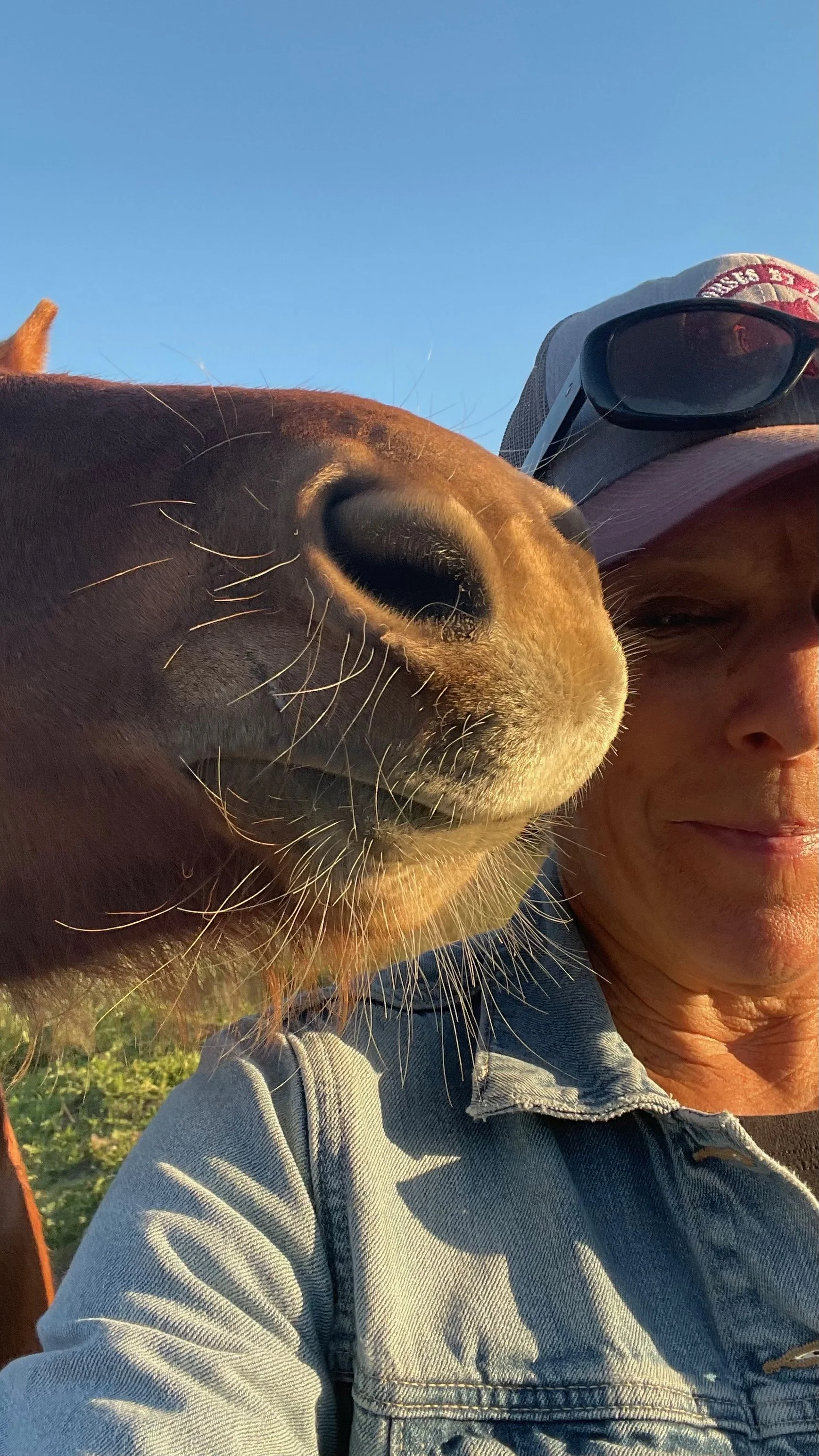
What if the animals weren’t an accident?
Most stories of St. Francis include something of his relationship with the animals. He preached to birds. He tamed the wolf of Gubbio. He was followed by a lamb—who followed him everywhere, even into church. He viewed all creatures as part of God’s family. These stories are often relegated to children’s sermons or saved for "Blessing of the Animals" services on October 4th. Father Richard Rohr refers to this as "birdbath spirituality"—sentimentalizing the "sweet" and "cute" story of St. Francis. As though it’s just for kids. As though it were simply sweet. As though it didn’t have more to offer.
But I think there might be more to it than that.
For some time now, as my own relationship with animals has deepened, I have considered the relationship St. Francis had with them. For me, it started with a dog named Tigger who happened to show up on my patio one evening at sunset and somehow managed to alter the trajectory of my life. Before Tigger, I had been trying to live a life in between—part-time in Baja, part-time in the US. Once Tigger showed up, it became clear: it was either keep my binational life or keep Tigger. I chose Tigger.
Four years after Tigger showed up in my life, to the day (October 24), while walking her in the estuary, I stumbled upon Luna. She was a horse, skin and bones, tied up where there was nothing to eat. Fast forward twelve years and now not only is Luna in my life, but also Alegria, Fortuna, Chispa, Zarco, Deseo, and Señor Sol. Let’s just say, it’s been a slippery slope.
The thing with St. Francis is, it can be easy (and safe) to just think of him as a somewhat eccentric renegade preacher off in the wilderness, spending more time with animals than humans. But that is not the entire story. The church and the society of St. Francis’ day were, to put it lightly, corrupt. One day while St. Francis—then just Francis—was praying, he heard a voice, or received a vision—his own burning bush—that told him to "repair my house which you see is falling into ruin." At first, he was not sure if it was a call to literally repair the dilapidated chapel where he sat. But it became clear that it was a broader calling—a calling for spiritual renewal, not just to repair an edifice.
I’ve long been fascinated by St. Francis. Somewhere along the way, though I don’t remember exactly where, I read an author who said that St. Francis, instead of fighting the corruption of his world head-on, "stepped to the side and did something more beautiful." Though the origin has faded, the phrase has stayed with me over these many years.
Step to the side and do something more beautiful.
The danger, of course, in fighting any kind of corruption head-on is that one becomes entangled in it. We run the risk of becoming like that which is being fought against—mirroring the rage, the ego, and the divisiveness. The beauty in St. Francis’ approach is that he did not exert his primary energy fighting that which was rotten to its core. Instead, he stepped to the side and created something new. He built a reality that was not just possible, but one that has lasted to this day—an order that remains at the edge, rather than the center, leavening the whole.
It makes me wonder, again, if the animals were not actually an accident. What if they were a central part of this calling? What if it was the time he spent among these other creatures that gave him the vision, the inspiration, and the "knowing" to do this new thing?
I didn’t set out to become a "horse person." I didn’t even set out to become an "animal person." One might say, in a strange way, that the animals actually converted me rather than the other way around. In the same way I stumbled into having a dog, I also stumbled into having a horse—and then multiple dogs and multiple horses. These incidents might seem random, or even coincidental. But I’ve begun to wonder if "providential" might be a better word.
Having animals in my life—actually, beginning to orient my life around the animals—has changed me. It is as though they have domesticated me, rather than the other way around. I have learned to be more present. To pay more attention. To be more mindful. To move more slowly through the world (except when galloping down the beach!). To notice small changes. To pick up on subtle signals. To begin to think in ways that are outside my left-brained, over-achiever, straight-A mind, and to engage another way of being in the world.
In a world where so much is going "pear-shaped," where institutions we once trusted are in bed with the enemy, and where the air feels thick with unhinged vitriol, this life with animals can seem frivolous. It can seem like a retreat. But the animals are not an accident.
The way of being they invite is a quiet, steady rebellion. It is a refusal to let the chaos of the "ruined house" dictate the state of my soul. By tending to the horses, by listening to the rhythm of the dogs, I am not ignoring the world; I am practicing for a better one.
To choose delight over outrage, and connection over combat, is a radical act. It is the work of repairing the house from the outside in. We do not have to scream at the darkness to prove we are not part of it. Sometimes, the most powerful thing we can do is turn our backs on the noise, walk out into the estuary, and do something so beautiful that the ruins no longer have the final say.
If you’re interested in exploring how to "take the reins" in your own life, join us for our monthly workshop. We gather to practice the skills of presence and intentionality, learning together how to move through the world with a bit more clarity and a lot less fear.
