The Engaged Rein: 坐等 & 水の心
Author’s Note: Consider this the "Everything but the Kitchen Sink" essay. It is what happens when my morning investing research, a martial arts philosophy, a horse-riding workshop, and a binge-watched TV series all decide to have a meeting in my head at 7:00 AM. It’s disparate, I know—but I promise, they are all talking about the same thing.
I’m not sure quite how to begin this, so I will simply begin.
This morning, while conducting my investing research—a pursuit that surprises many, though I have loved the distinct way of thinking, calculating, and understanding it has provided me over the last five years—I found myself in a conversation with an AI about market strategies. As part of its explanation, it used two characters:
坐等
I do not speak Chinese, nor have I ever conversed with AI in Chinese, so it was a noteworthy and curious gap. Zuò děng. "Sitting and waiting" was how it was described. I began to dig deeper. I wanted to know: is this sitting and waiting a relaxed state? Is it predatory, like a predator lying in wait? Or is it merely passive?
The deeper I went, the more it became clear that Zuò děng was actually the state I wrote about recently when discussing the "green flash"—that sense of expectant, engaged waiting, of being utterly present in the moment before the light shifts.
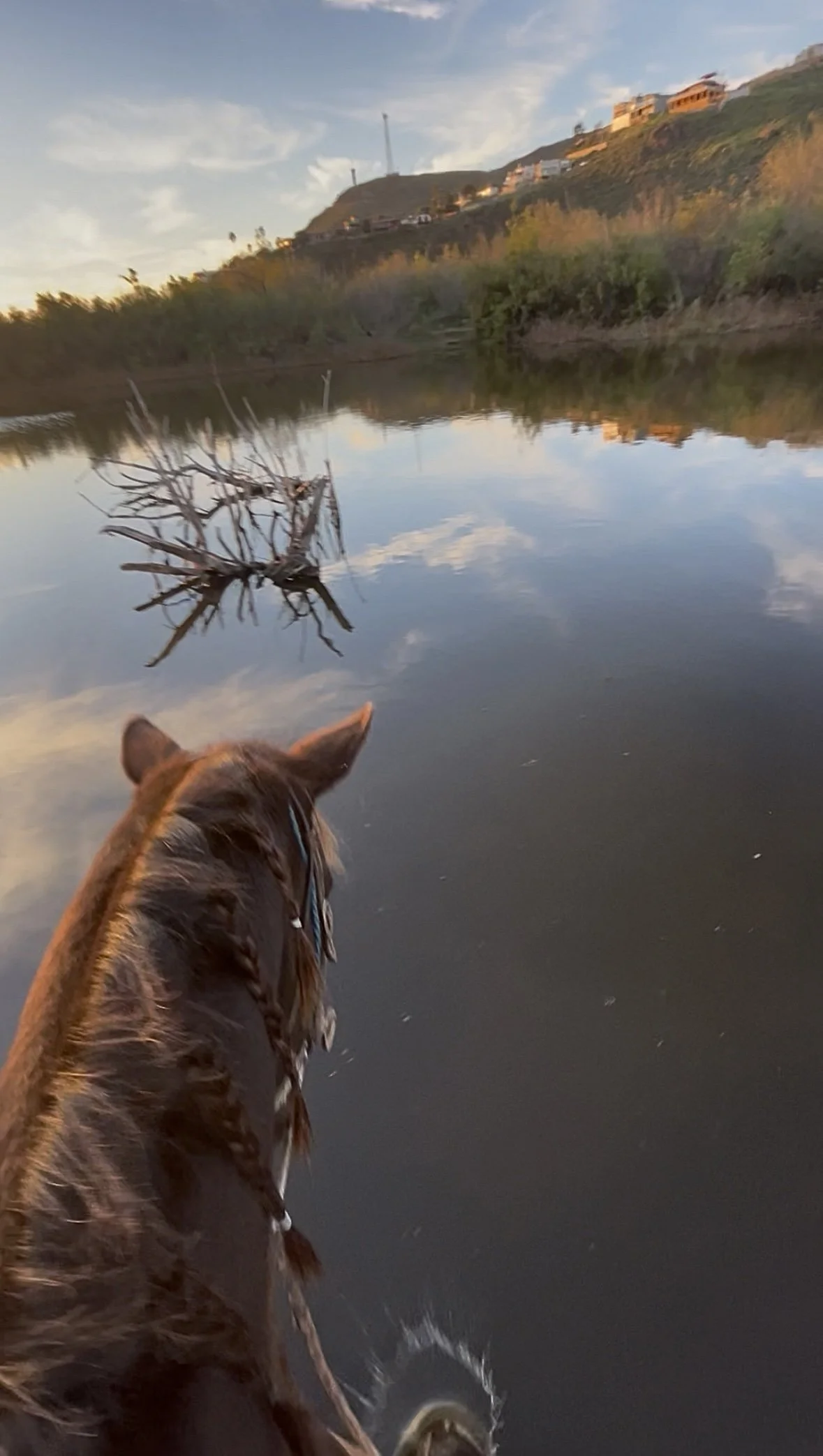
This, in turn, reminded me of a concept from horseman and martial artist Mark Rashid: "A mind like still water," or Mizu no Kokoro (水の心). Though a martial arts term, Rashid uses it to describe the ideal state of being when working with horses. It is a state where we are present but not passive. It is an active sense of presence—like waiting for the green flash, or like the discipline required in investing. Warren Buffett often speaks of "waiting for the fat pitch" and not swinging at every ball that crosses the plate. You wait for the one that is yours, and then you swing with everything you have.
The threads continued to weave together as I thought of an episode of The Chosen I watched last night. I am usually skeptical of "religious" programming, but after repeated nudges, I began to watch. By the time I reached the episode of Peter catching a full net of fish, I wasn't just convinced; I was captivated. It was as though a story I had only ever heard in "black and white" had suddenly exploded into Technicolor.
In the episode I watched last night, Jesus is teaching casually in a house. As a crowd gathers at the windows, someone asks the pressing question of the day: "When will the Kingdom come?" They were looking for a timeline for liberation from Rome—of escaping oppression, of being liberated from the heavy yoke of their occupation. Instead of answering directly, Jesus offered a parable: A rich man is at a wedding feast. What are his servants doing while he is away? Are they sleeping? Are they just hanging out? No. They are at the gate—ready, prepared, their lamps lit, waiting for the master to come home.
坐等 (Zuò děng)
水の心 (Mizu no Kokoro)
Waiting. Watching. But active. Not a ‘vigilant’ watching (which can lead to exhaustion and depletion) but a present watching. A responsive waiting. A readiness.
Whether it is the green flash or, as we discussed in the Take the Reins workshop, an engaged rein, the principle is the same. An engaged rein is not too loose, nor is it too tight. It is alive. It is ready, able to respond, grounded, and present. It is waiting, but active. It is never passive, lazy, or powerless.
This state? It is a state of agency. It is the refusal to busily run out in front, trying to smooth over every bump that might come up, or to wistfully wish for a past that is no more. It is to be firmly rooted in the "now," connected, awake, and ready.
It is the lit lamp. It is the still water. It is the hand on the rein, waiting for the flash.
If you’re interested in exploring how to "take the reins" in your own life, join us for our monthly workshop. We gather to practice the skills of presence and intentionality, learning together how to move through the world with a bit more clarity and a lot less fear.
