The Gift of Spaciousness
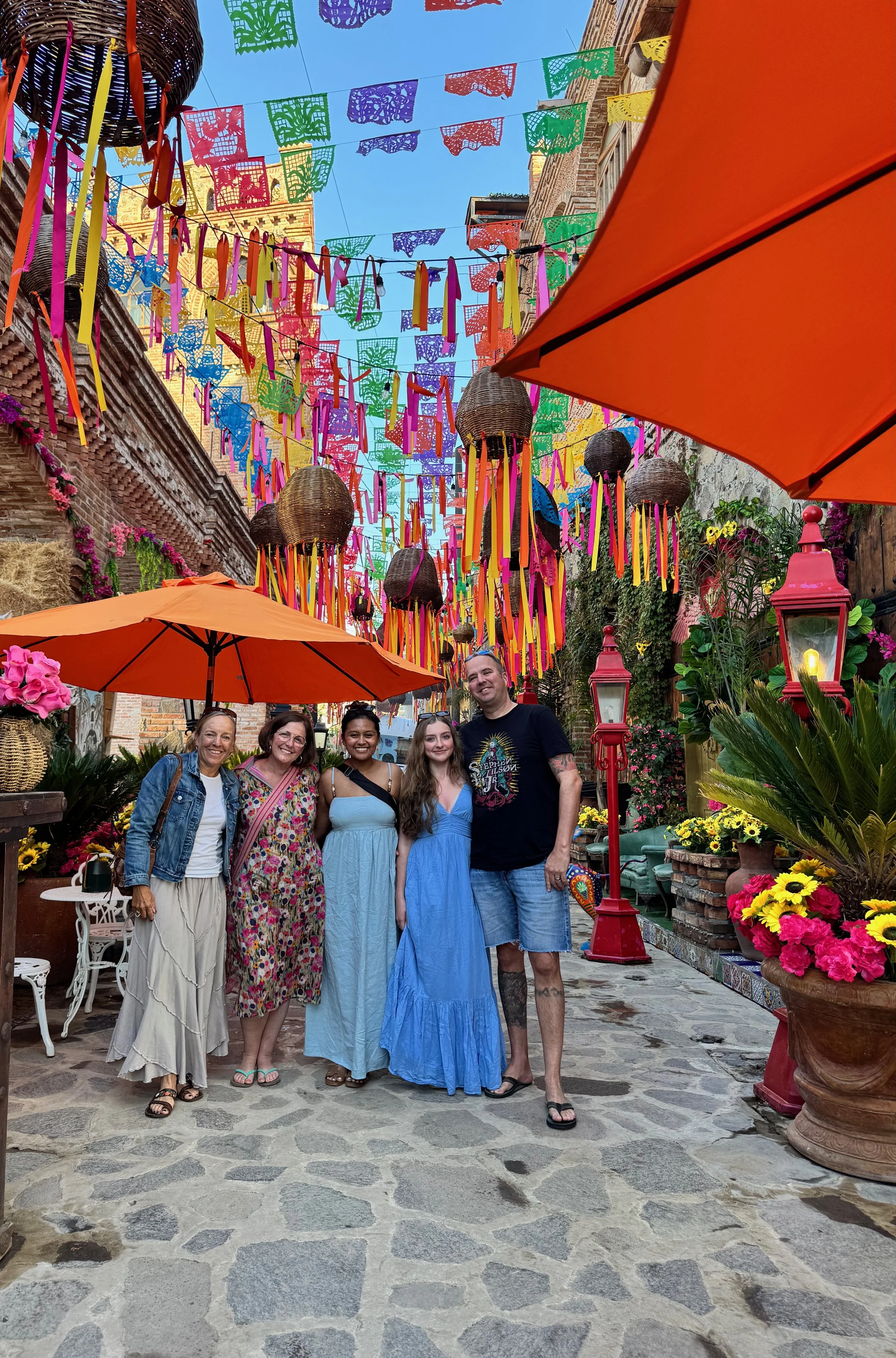
For most of my life, I assumed that to be a “good host,” I had to be perpetually attentive—a 24/7 source of organization and presence. I thought love looked like pouring myself out until I was depleted, micromanaging every detail to ensure a guest’s experience was “just so.”
It was a bit like a Waymo car—always pointing outward, scanning, asking: “What do you need? What do you need now?” On the surface, it may seem like attentiveness, even kindness. But underneath, there is a shadow side. When we try to have the experience for people, we actually rob them of their own.
Hosting isn’t just about being present; it is about the art of allowing for spaciousness.
When we hover, when we over-function, we don’t give our guests the room to simply be. We wear ourselves out trying to meet every perceived need, and in that exhaustion, the joy of the visit evaporates.
I didn’t invent this “martyr” style of hosting. There is the familiar story of Mary and Martha hosting their friend, Jesus. Martha was “busy with many things,” managing the details, while Mary simply sat at his feet. Someone, of course, had to prepare the food—but Martha’s management actually distracted her from the real point of the visit. I think many of us grow up with this “Martha” ideal and could use a bit more Mary in the mix.
What if we allowed ourselves to be led by desire rather than duty?
I have seen this shift in my morning practice of fifteen minutes of silence. It started as a bit of a chore—a “should,” a duty. Something I knew I needed to do, but didn’t necessarily want to do. But over time, it transformed. It moved from a task to a gift; from duty to delight. I look forward to it now. I would even say I hunger for it.
I wouldn’t have called hospitality a “duty” before, but looking closely, there was a layer of duty hidden within it—the felt obligation to be always “on.” But the role of a host isn’t to create a schedule; it’s to create space. A container for connection. For communion.
There is a vital balance between presence and absence—the desire to accompany and the desire to tend to one’s own soul. I think this is why hosting in the past has often felt somewhat exhausting to me. I assumed I had to empty the vessel until nothing was left.
It brings me back to that famous Howard Thurman quote: “Don’t ask what the world needs. Ask what makes you come alive, because what the world needs is people who have come alive.”
When we practice our hospitality—and our lives—out of a sense of “what is needed,” we end up worn thin, depleted. But when we follow what makes us come alive, we find that we are filled to the point of overflowing. That overflow is what actually reaches the world.
You don’t have to give 110% to prove your love or your devotion.
It isn’t good for you, and honestly, it isn’t good for the ones you are giving to.
The greatest gift you can give is a host who is actually, vibrantly alive—and the space for everyone else to be the same.
