The Patronage of Goodness
They say that what you focus on grows. Or, put another way: where your heart is, there your treasure will be. We are often told to invest in what we want to see flourish—to "put our money where our mouth is."
I remember learning this first as a consumer—the idea that how we spend can be a conscious act of doing good. We choose Company A over Company B because we believe in their values. Later, I learned this applied to investing, too; we don't just consume what we want to see in the world, we invest in it to provide the capital for it to grow.
But lately, I’ve been thinking about this on a much more "local" level. Living in a small town, "buying local" is often a matter of simple, beautiful convenience. I buy vegetables from the man who brings them straight from the field to his stand on Friday afternoons; I get cheese from a neighbor’s ranch while it is still fresh.
But there is a layer beyond traditional consumption. What about giving to what you love?
I don’t mean traditional charity or non-profits—though those are important, of course. I’m interested in the bridge between "spending" and "giving." I’m interested in something more grassroots: Giving to the creators.
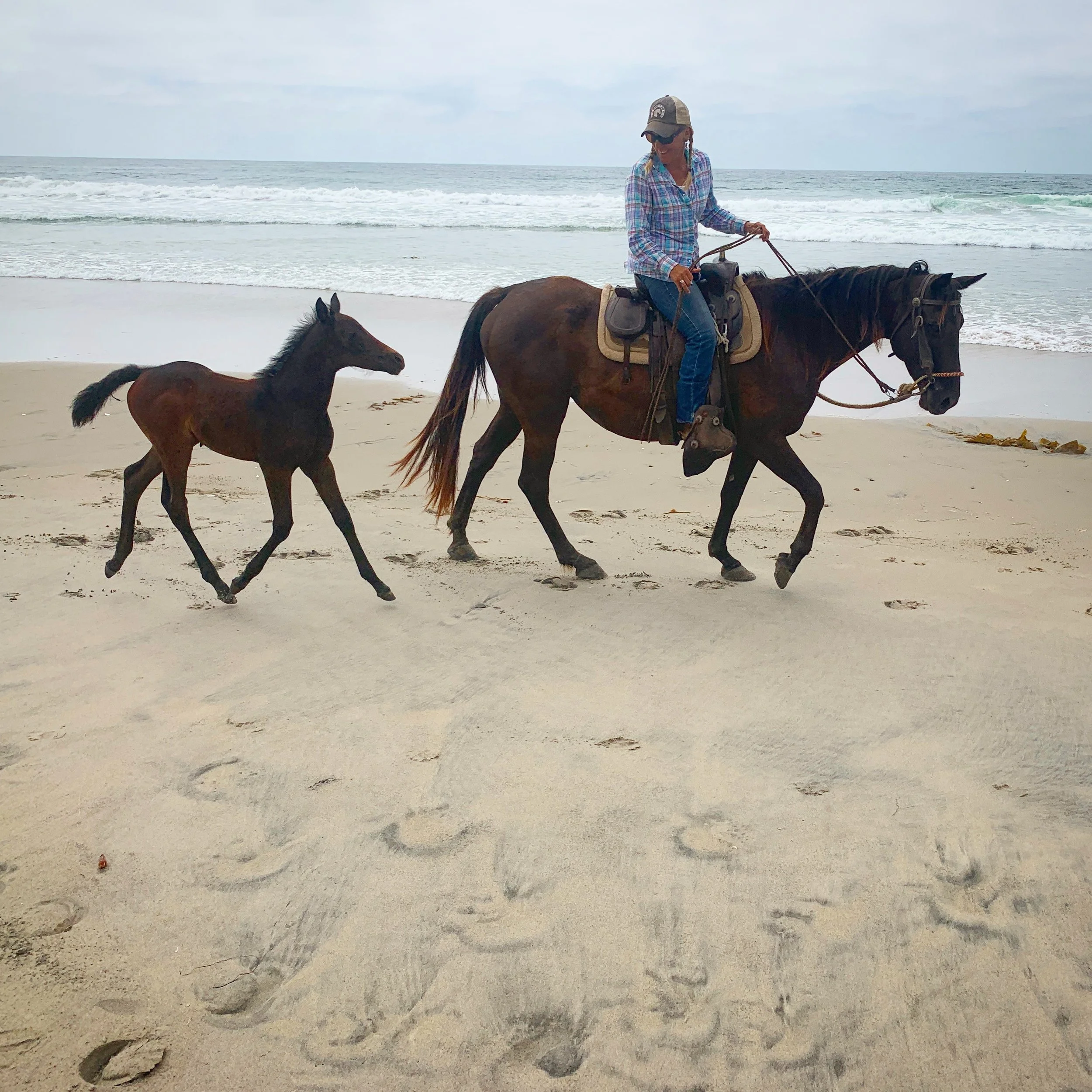
For example, I have a $10 monthly subscription to a video library by a horseman whose work changed my horse life. I haven’t watched a video in over a year. From an "optimization" standpoint, this is a "money leak"—a subscription I’m not "using." I thought about cancelling it. But then I made a conscious decision to stay.
I realized my $10 isn't a fee for service; it is a vote of confidence. I love what he is bringing into the world, and I want to support its existence, even in this small way. It isn't a "wasted" subscription; it is an intentional choice to nourish what I want to see grow.
This is a significant shift for me. I grew up with the dual ideas of "charity" and "frugality." Frugality tells us to remove "money leaks" wherever possible. And if we’re talking about a software giant or a product that no longer aligns with our values, by all means, "trim the fat."
But what about the creators? The writers, the horsemen and women, the artists? What about those who are working to bring beauty into the world, even at a small, local scale?
What would it look like to contribute to them with no expectation of a "return on investment," simply because they bring beauty into a world that desperately needs it? Even in times when money is tight, the investment of a "like," a comment, or a re-share on social serves a similar purpose. It is the energy that helps beauty survive.
Lately I’ve been hearing creators ask: "How can I bring my poetry or painting, or music, or quilting into the world when there are so many 'real' and pressing issues at stake? Isn't my art insignificant?"
To this, I say: beauty is not a luxury or an "extra." In times of darkness, it is essential.
As I sit here this morning, I am looking past my utility bills—the internet, the phone, the streaming services. I am asking myself: What is the beauty I want to bring into the world, and what is the beauty I want to help others sustain?
Perhaps the most important "optimization" we can make isn't cutting costs, but redirecting our resources toward meaning. When we move from being "consumers" of content to "patrons" of beauty, we stop looking for what we can get and start looking at what we can make possible. In doing so, we find that the "treasure" we've been looking for isn't what we saved—it's the world we helped build.
