The Reset (life lessons from tech support and the art of pondering)
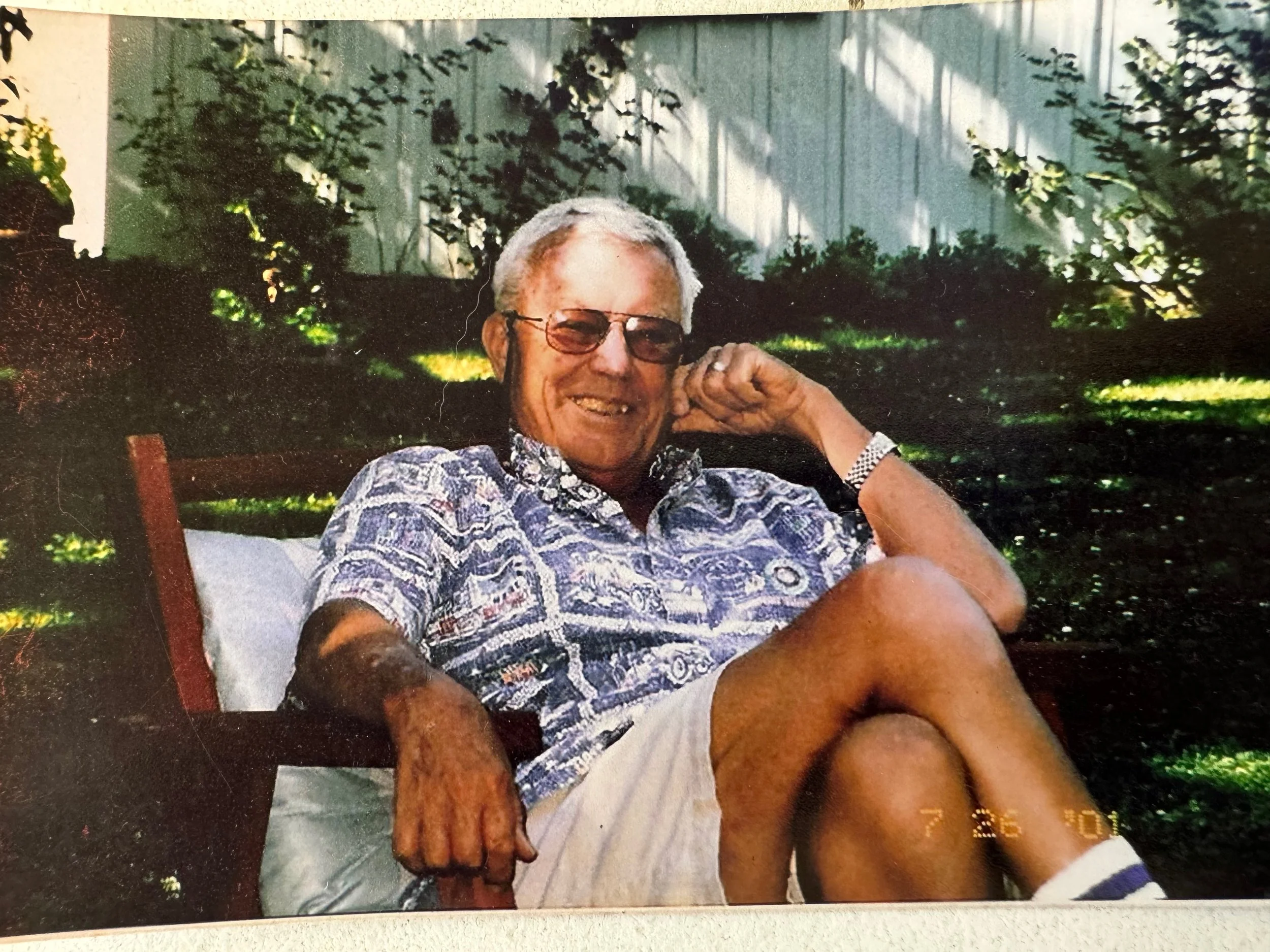
It is the late 1990s. My dad is sitting in the driver’s seat of my still fairly new SUV parked in the driveway. He has a big grin on his face—a grin of pure satisfaction, tinged with just a bit of mischief.
“What was it?” I ask, knowing by his expression that he has solved the mechanical problem I asked him to diagnose.
“I don’t know,” he says, barely able to get the words out he is so proud of his own ingenuity, “but I rebooted it and now it works like a charm!”
Standing there in the driveway, I can’t contain my laughter.
I had been working in the tech industry for five years, officially a “geek” back when that was still a novel phenomenon. My dad was always intensely curious about the latest tech learning, including a concept that was also fairly new at the time: the reboot solution. In those days, the idea that you could just turn an electronic device off and on again to clear its invisible glitches felt like magic. Whenever my dad faced a computer issue, I’d tell him to reboot, the problem would vanish, and he’d be left completely dumbfounded, proclaiming, “How do it know?”
So there in the driveway, with the roles reversed, he couldn’t contain the joy of giving me a taste of my own ‘geek’ medicine.
Reboot.
Recently, I’ve noticed a word slipping casually into conversations around me, connecting me right back to those old days in the driveway. After staying at my casita for a weekend, a young friend told me, “That was just what I needed—the perfect reset.”
It made sense, of course. The casita is a grounding, relaxing getaway. But the specific idea of a human “reset” stuck with me. Not long after, another friend recounted her weekend plan: “Oh yeah, it was the perfect reset.”

There it was again. The perfect reset.
Cut to this morning.
I woke up refreshed—but deeper than just a good night’s sleep—as though the inner cobwebs had suddenly been swept away. The clouds had cleared, the sun was out.
Like a lizard shedding its skin. Like the story of Eustace Scrubb in C.S. Lewis’s The Chronicles of Narnia. Eustace had greedily but accidentally turned himself into a dragon, but the lion Aslan arrived and, with a single sharp claw, gently tore away the thick, suffocating dragon skin to expose the real boy hidden underneath.
That is what a reboot feels like. That is what a reset does.
It sweeps away the inner cobwebs. It clears away the inner glitches. The internal commentary—the one that is constantly running, critiquing, advising, pushing, and kibitzing—suddenly goes silent. But the silence isn’t an absence of sound; it is a fullness of presence.
When I was growing up my dad would often spend long hours in the garage, or in the yard, to my mind, doing nothing. “What are you doing?” I would often ask him.
I’m just pondering. Now, looking back, I think it was his own version of ‘rebooting.’
Reboot. Reset. It’s like magic.
But really, it is the relief of coming home—to one’s source, and to one’s self. Wholeness. Alignment. Regulated.
In that quiet, if you listen closely enough, you can hear the whisper of the space around you:
“You’re back. Welcome home. We’re so glad you’re back.”
