Time in the Saddle: Beyond the Quick Fix
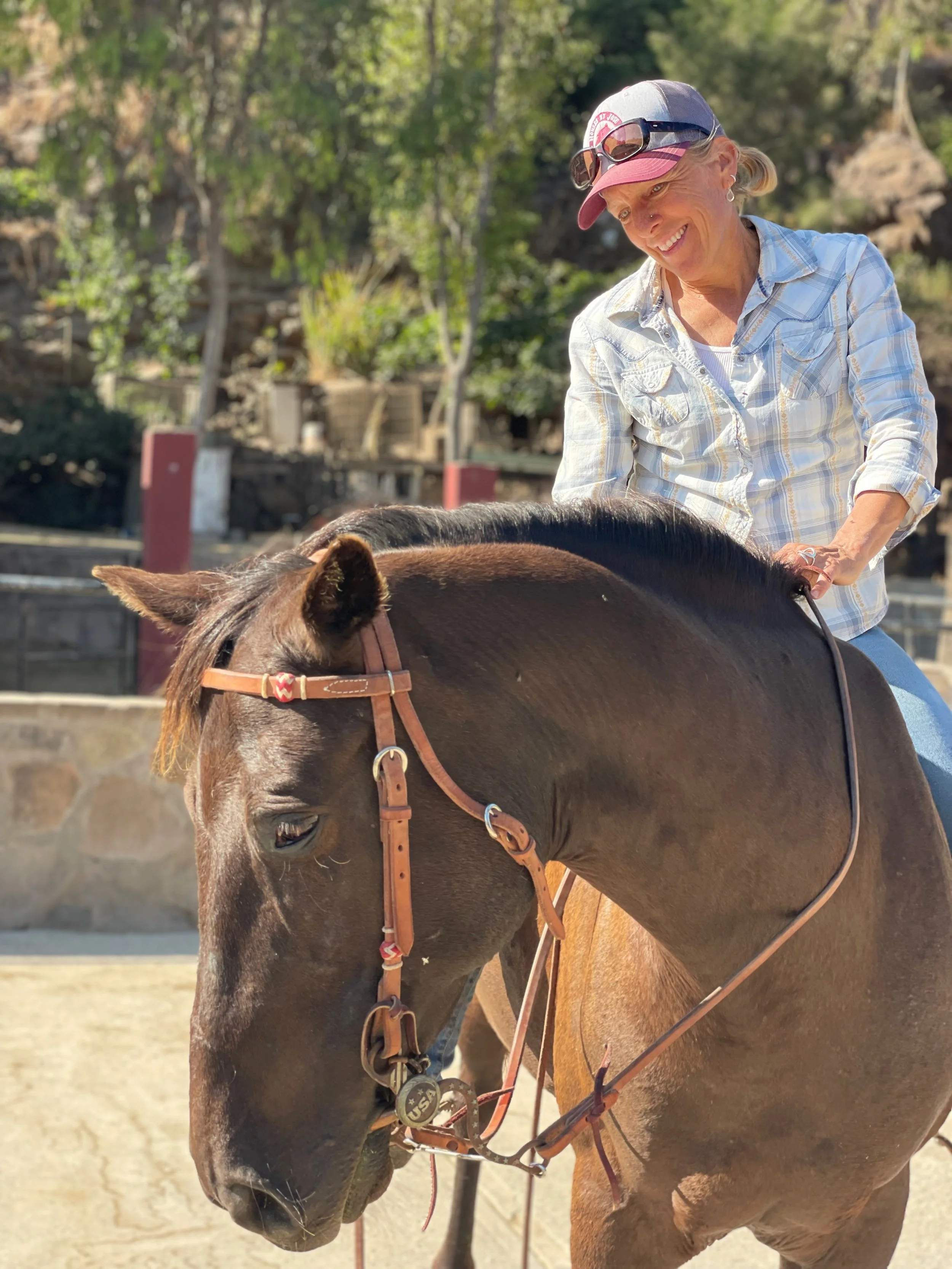
Yesterday, I was talking with one of the young Mexican vaqueros who works at the ranch. He is a seasoned horseman, not yet twenty-five, but he has been riding since before he could walk. He is gentle but strong, kind but firm—qualities that aren't created overnight. They are cultivated.
He was recounting a story about a rider he was helping: an athletic, driven, successful American man who had come to horses later in life. In the beginning, for this new rider, it was pure adrenaline—galloping through fields, horse and rider flying. But after the initial rush, reality set in. The horse stopped responding to cues and started merely reacting to pressure. Difficulties arose, and with them, frustration.
The rider sought out the young vaquero for a solution. He asked what he could buy to fix the problem: A different bit? A different headstall? What piece of tack would finally improve his horsemanship?
The vaquero looked at him, slightly confused, and said: “The bit is fine. The headstall is fine. You don’t need to buy anything. You just need to find it in yourself.” There was nothing to buy. There was just something to be.
There is a "shininess" to the new that can be exhilarating. Novelty provides a tailwind, whether we are discovering a new passion or a new way of living. But eventually, reality catches up. The shine wears off, and what once felt like a flight begins to feel like a grind.
I remember first hitting this wall in high school. Up to that point, I hadn't needed to study much; good grades came easily. But then I met Physics. I couldn't breeze through it, and I realized I had no "muscles" for the work. Because things had been easy, I hadn't developed the patience required to work toward something that cannot be conquered in a day.
When I started riding fifteen years ago, I faced the opposite problem. Unlike school, horsemanship did not come naturally to me. I was afraid and lacked confidence, yet I desperately wanted to improve. I remember asking, “How can I get better more quickly?”
The answer was always the same: Time in the saddle.
There is no substitute for it. Time in the saddle isn't always flashy or exhilarating. It is a practice—a quiet, persistent commitment that doesn't wait for the stars to align. We often try to "prepare ahead" to avoid the friction of living through difficult things. I remember when my father was dying of cancer; I harbored the idea that because I had studied grief, I might be able to move through it more quickly. I found out, slowly and painfully, that you cannot study your way out of a seat in the saddle. You have to ride it out.
In our culture, we are often taught that if we encounter resistance or friction, it must be a sign that we are on the wrong path. So, we go looking for a new tool, a new piece of "tack," or a new strategy to make things frictionless again. We try to buy our way into what can only come through experience.
But the friction isn't necessarily a sign to stop—it can be the sound of the muscles being built. The things that are most worth doing—the things that require us to be gentle yet strong, kind yet firm—cannot be bought or bypassed or rushed.
If the horse isn't turning, the bit is probably fine. If the work feels heavy, the tools are likely sufficient. What we are missing isn't a new gadget; it is simply more time in the saddle.
So, what is the answer? We get back in the saddle. And the amazing thing? It is when we keep moving, keeping going forward, that one day we realize—the view has changed.
