On Becoming Wholehearted
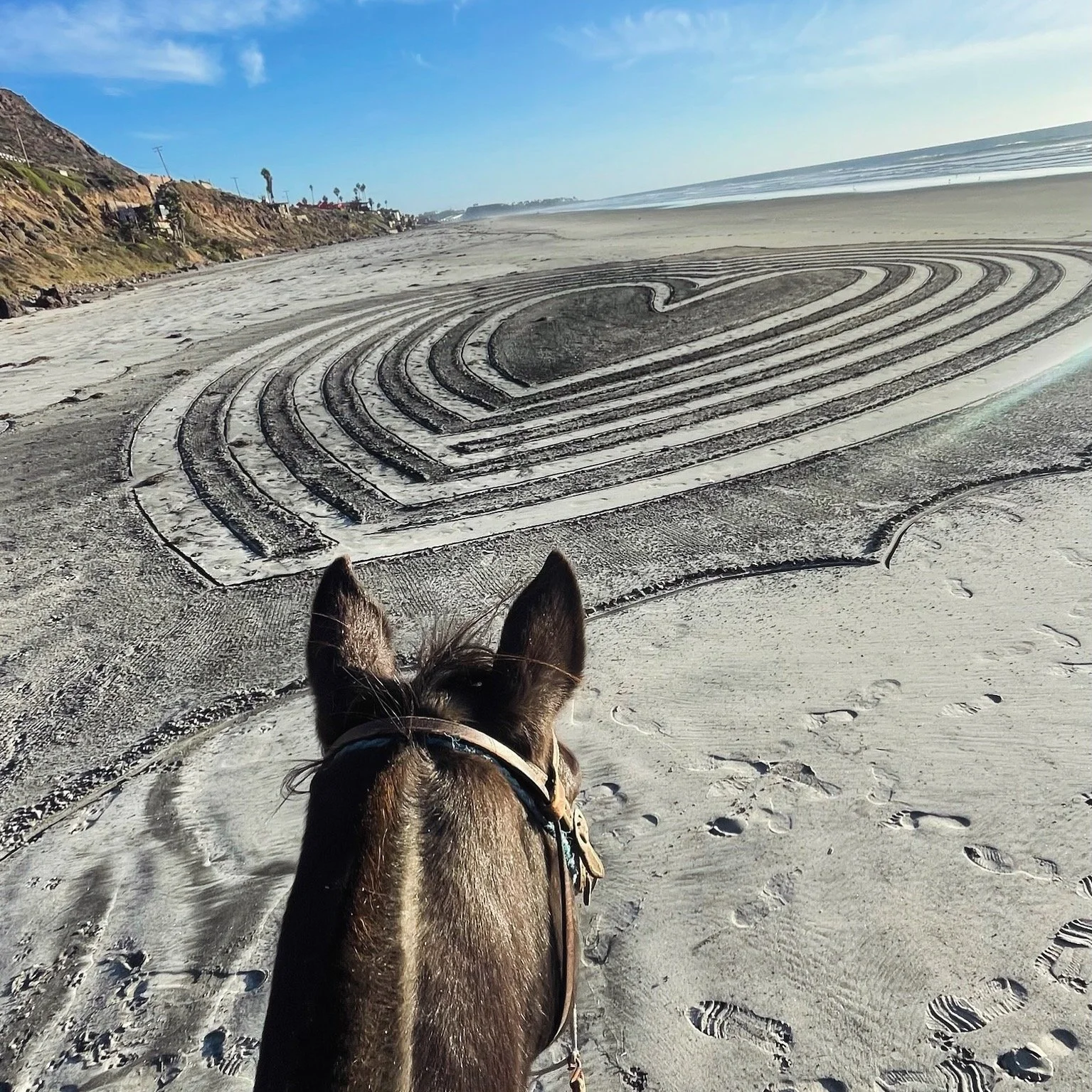
A few years ago, I came across an essay by one of my ‘horse people’—a loose term I use for the amazing humans I follow because of their connection with horses, but who offer far more than just ‘horse sense’ to the world. The author was Kelly Wendorf, and the essay was titled “The Surprising Antidote to Your Exhaustion.” At the time, we were deep into the pandemic—in those long, slogging, "will-this-ever-end" stages. I found myself personally mired in an extended period of exhaustion as well, so the title felt like a life raft in a storm. What I read both surprised and intrigued me.
Just yesterday, another one of my horse people, Jane Pike, wrote on a similar theme: the critical difference between being ‘tired’ and being in a nervous system state of ‘collapse.’
You might be asking, what does this have to do with my non-horse life? I think the answer is: everything.
This connects back to something I wrote a few weeks ago regarding the "two kinds of tired." I called them good tired and bad tired. Good tired is the fatigue you feel after a challenge that aligns with your goals, values, and delights; it is the weariness of a day well-spent. Bad tired is the feeling of being tossed like flotsam and jetsam on a stormy sea—an exhaustion that doesn't feed the soul, but depletes it.
In her essay, Kelly Wendorf quotes Brother Steindl-Rast in conversation with David Whyte:
“The antidote to exhaustion is not necessarily rest. The antidote to exhaustion is wholeheartedness. You’re so exhausted because you can’t be wholehearted at what you are doing… because your real conversation with life is through poetry.”
It was that very conversation that famously led Whyte to leave his corporate life and become a poet.
Boom.
Jane Pike expanded on this by explaining that while "tired" is cured by rest, the nervous system state of being in “collapse”—the freeze response when fight or flight are no longer options—is not. In fact, for a horse or a human in a state of collapse, traditional rest can actually be counterproductive. What the system requires is not just movement for movement’s sake, but intentional action. It requires what Brother Steindl-Rast calls "wholeheartedness."
I have experienced this shift firsthand. I am not sure if there is one thing to point to that caused it, but a definite part of it was when I changed my morning routine. For a long time, my ritual was to wake up, drink coffee on the patio or with the horses, and contemplate life. I would read books on spirituality or self-development, yet I struggled with a persistent, unexplained sluggishness. It was as though I was becoming a stagnant lake—filling more and more with water, but without any outflow or anywhere for it to go.
A friend eventually told me, “What you need is to get up and go for a run—stop just sitting on the patio with your coffee and get moving.” At the time, it felt counterintuitive, even a bit rude. It sounded like a demand to "do more" when I already felt like I wasn't enough. It sounded like more stress, not less.
But then I decided to test the advice. I accepted an invitation to join friends at the gym at 7:00 AM—right in the middle of my sacred coffee and reading time. My body protested; I had to set an alarm for the first time in years. Yet, once I got out the door, the craziest thing happened: I felt like I was receiving energy rather than spending it. I was being filled, not emptied. This movement—done in community—was feeding a hunger I hadn't even realized was there.
Jane Pike notes that the plan for emerging from collapse—both for horses and for humans—"needs to be gentle, consistent, and specific." It is difficult because the brain is actively telling the body not to move—and yet moving is exactly what it needs.
Each morning as I got up to go to the gym, I felt that tug-of-war between the body wanting to "rest" and the brain choosing to engage. This wasn't a "no pain, no gain" mentality. There was no "forcing" about it. Rather, it was the realization that movement, camaraderie, and a feeling of agency were changing not just my body, but my state of being. This intentional action was becoming something I actually desired.
Looking back, I see that the magic was partly in the power of agency—the feeling of following through on a promise made to myself. This act of empowerment in one area began to spill over to other areas. It was as though my creativity, energy, and engagement started "coming back online," as if my soul were waking up from a long trance.
It isn't about doing more—doing more for more’s sake doesn’t work. It’s about creating an outflow for all that you've taken in. It’s about showing up and being fully present in the doing. I think this is what it truly means to become wholehearted.
