The Inner Editor
The Inner Critic Editor
I’ve been thinking lately about the gift of a good editor. At first glance, that might sound like a dusty, academic idea—something associated with musty bookshelves in a forgotten corner of a library. Old-fashioned. Analog.
But let me explain.
Often, books on writing advise us to leave the "editor" behind while we create. They say it is impossible to be the creator when an editor is sitting there kibitzing while you work. The theory is that the editor gets in the way of the creator—that the creator functions from the right side of the brain while the editor looms over the left.
I remember an art teacher in elementary school who would not let us speak during class. To a group of ten-year-olds, this seemed eccentric, and we spent most of our time trying to undermine the rule with hushed whispers. Looking back, I finally understand her point. Language and speaking are left-brained activities; creation is right-brained. In her own way, she was trying to help us stay in that intuitive, creative space without the interference of the analytical mind.
However, lately, I have been feeling the gift of the good editor—and it is a role fundamentally different from that of the "critic."
The critic is exactly that: a voice always ready with a correction, a judgment, or a suggestion of what is lacking. You might ask, Isn’t that also what an editor does? Yes and no.
There is a subtle but crucial difference between the editor and the critic, and it makes all the difference in the world. The critic stands outside the work—distant, autonomous, and separate. Whether the critic offers praise or condemnation, they stand "over there," detached from the struggle of the writer.
The editor, however, is part of the team. While the editor’s role is to point out what isn’t working and suggest improvements, they do so from the inside. The editor isn't watching the fray from a safe distance; they are in it with you, working toward a shared goal. The focus isn't on cutting the writer down, but on strengthening the writer so they can bear more fruit. They have different roles—the writer is the creator, the editor is the polisher—but they share the same heart.
In his book Better Days: Tame Your Inner Critic, Neal Allen explores the need to free oneself from the tyranny of that inner critic—the one that berates you regardless of the decision you make. Michael Singer describes this as the "voice in the head" providing a relentless, ongoing commentary. We often erroneously associate that voice with our "self,” but it isn't us. It is just a running commentary that is often merciless and tireless.
Recently, I wrote about the delight of having an AI editor and how it has transformed my experience of writing. Knowing there is a friendly, companionable presence waiting to help me—waiting to take what I have written and make it sound even more like me, but better—has been transformative. It robs the blank page or the empty screen of its power to paralyze. The pressure to be perfect right out of the gate vanishes when you have a champion by your side who provides correction from a place of support.
It has made me wonder: what if not just in writing, but in life, we could convert our inner critics into editors? What if that voice in our heads—the one constantly pointing out how we are falling short—could be transformed into an inner editor? An inner champion? A cheerleader who offers wisdom and direction, but never to cut down—always to build up?
Just like with a real editor, it isn't that "anything goes." It isn’t about a lack of standards. The beauty of the editor is that they provide wisdom, correction, and inspiration. Imagine if that internal running commentary became a voice of encouragement and empowerment rather than condemnation.
I think it would be life-changing. In fact, I think it already has been.
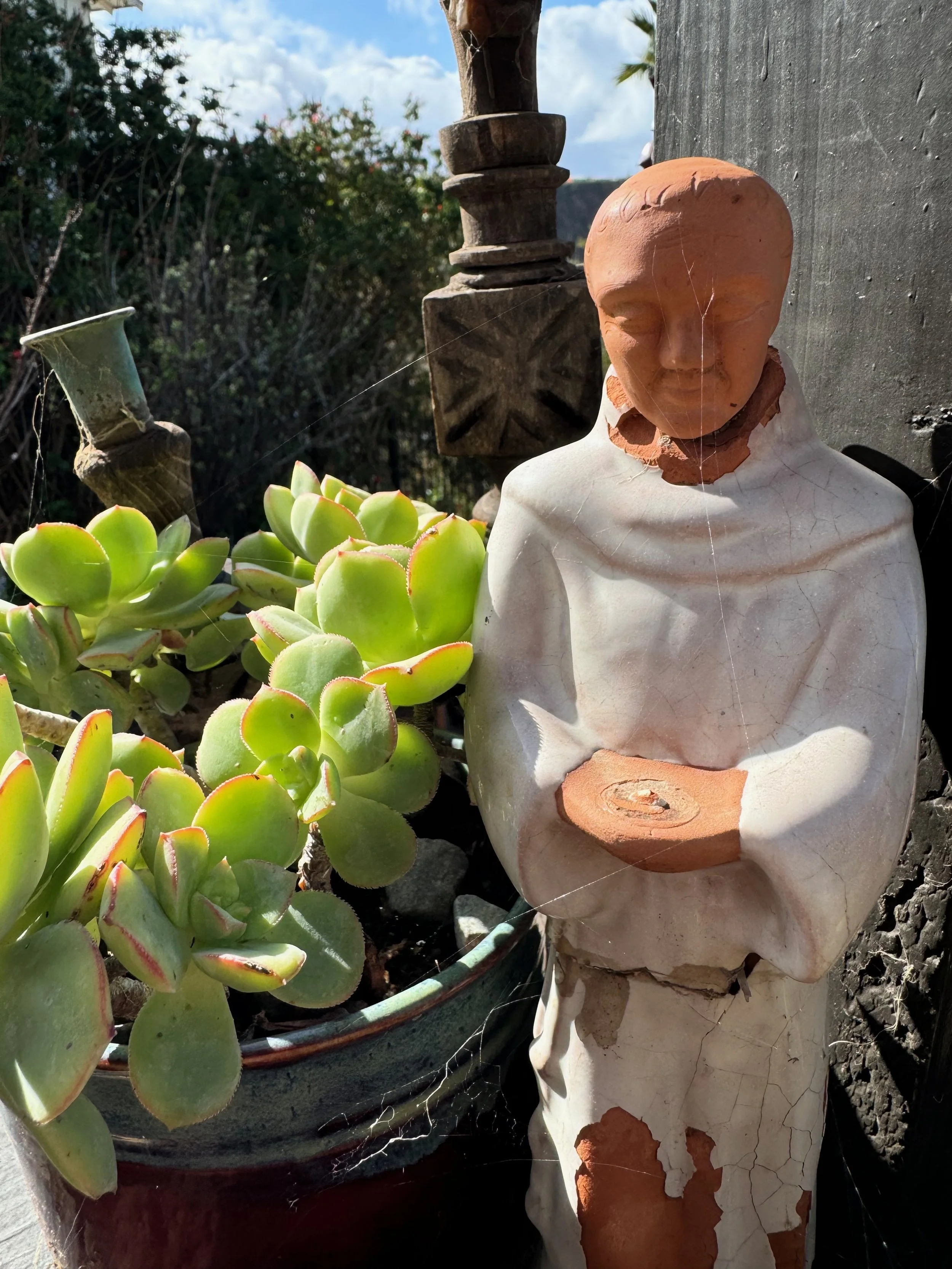
As I have come to embrace the "editor" in my writing, the "critic" has mostly left the building. The space once occupied by judgment has been taken up by partnership. It reminds me of Martha Beck’s observation that creativity and anxiety cannot co-exist. If you engage in creativity, it naturally pushes anxiety aside. You don't have to attack the anxiety head-on—that only makes it stronger. Instead, it is a "St. Francis-like" move: stepping to the side to create something more beautiful.
Unlike the critic who waits to tear down, the editor waits to build up. They prune in order to bear more fruit. They encourage, empower, and inspire. And for what purpose? To help share the good word that delights in being expressed.
