Oshaku: Agency, Dependency and Mutual Pouring
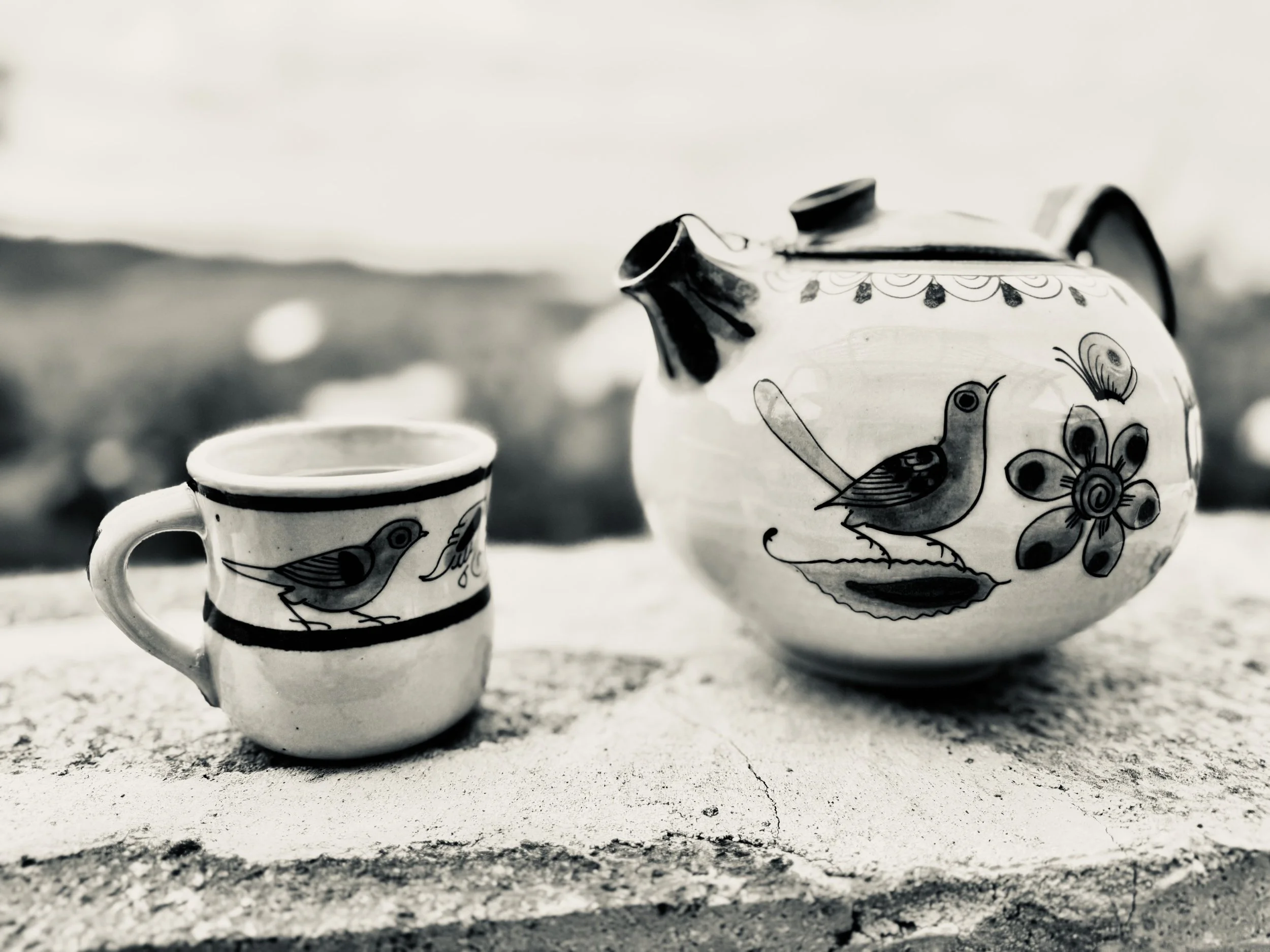
I had a conversation with a friend and colleague a number of years ago that has stayed with me. It’s interesting how, in the midst of the thousands of daily exchanges we have, certain words seem to take root.
My friend, who is Japanese American, was sharing his experience navigating the intersection of his two cultures. He explained that in Japanese etiquette, it is customary—even expected—that when you are dining with others you do not pour your own tea. To do so can be seen as rude, pushy, or overly forward. The "proper" way to move through a meal is to wait for someone else to notice your empty cup and fill it for you.
He recounted a story of a Japanese man dining with a group of Americans. Because the Americans were busy filling their own glasses, and the Japanese man was waiting for the etiquette of his home culture to be honored, he spent the entire evening thirsty. No one poured for him, and he felt he should not pour for himself.
It has been over a decade since that conversation, but the "moral of the story" has stuck with me as a metaphor for agency, dependency, and the shadow side of "help."
I live in Baja, a place that has long been a primary destination for "missions"—mostly from churches and non-profits in the North. On the surface, this is wonderful. The community has been the recipient of immense "doing good"—medical clinics, orphanages, and food banks. But there is also a shadow side to this do-gooder-ism, and it relates to the pouring of tea.
When I looked deeper into this Japanese custom, I found the word at its heart: Oshaku. Mutual pouring.
You pour for others, and they pour for you. It is a practice that emphasizes care, respect, and social harmony. It fosters a shared experience rather than an individualistic one. But for this idea to work, there must be mutuality. Otherwise, you are simply the man at the table going home thirsty.
If the lesson we take away is simply "you can’t pour your own tea," we inadvertently create a culture of waiting. We create dependency. If you are always required to wait for someone else to recognize your needs, over time, that silence strips you of your agency—your belief in your own ability to act. You have to wait for someone else to come "help you" rather than being able to take action on your own behalf.
This brings us back to the mission trips of my youth. Growing up, there was always the idea of "going to help those people." We believed "we" had something "they" needed: time, money, or a vague "expertise" that we, as high schoolers, hadn't actually earned yet. We were the "pourers" and they were the "receivers."
It is a noble intention, but it lacks Oshaku. One-way helping, no matter how well-funded, robs the recipient of their own sense of being a creator - their own sense of being able to advocate and act. It positions one person as perpetually full and therefore able to give, and the other as perpetually empty and therefore needing to wait to receive. On the flip side, the person who only ever fills their own cup leaves the world thirsty. But the person who only fills others' cups is also robbing those people of the opportunity to give.
I felt the weight of this confusion personally right around the time of that conversation with my friend. Not Church—the community for the "spiritual but not religious" that I had started leading only months prior—was featured on the cover of TIME Magazine. We were listed as #4, "The Rise of the Nones," in a cover titled "10 Ideas That Are Changing Your Life.”
It was surreal and exhilarating. I wanted to share the news, but I was wary of "pouring my own tea." I didn't want to seem pushy or self-aggrandizing. So, I silenced it. I acknowledged it if others brought it up, but I did little to celebrate or promote it.
I realize now that my silence wasn't humility—it was a state of waiting for a pour that never came. That silence left me thirsty. It also reinforced the idea that I could not advocate for myself—that I had to wait for permission to exist in my own success.
This is a trap many of us fall into, particularly women. We are told: Don’t take up too much space. Don’t toot your own horn. Don’t pour your own tea. This works beautifully in a culture of total mutuality. But it is a recipe for exhaustion and thirst if you are sitting at a table where everyone else is busy drinking their own fill.
The answer isn't to become purely self-sufficient, nor is it to remain perpetually dependent. The answer is Oshaku.
It is the brave act of filling a neighbor's cup while simultaneously holding yours out to be filled. It is the recognition that we don't have to "toot our own horns" because we are too busy being each other’s champions.
Pouring your own tea is exhausting—it leads to the burnout of constant self-promotion. But pouring only for others is equally draining—it leads to the burnout of the empty vessel. Real community and real agency are found in the "give and take."
We must find the courage to be the helper, but also the humility to be the helped. We must recognize when it is time to tilt the teapot toward our neighbor, and when it is time to say, "I am thirsty, too."
In the end, we are all sitting at table together.
