The Shame Impediment: On Public Speaking, Moses, and Agency
I don’t mind public speaking. I know it’s supposed to be a universal fear, but I actually thrive on it. I have the "stage presence"—honed over thousands of hours as a corporate computer trainer and years as a "preacher" delivering sermons. Recently, while officiating a bilingual wedding, I felt that familiar spark. I told a friend afterward, "I was born to do this."
But here is the secret: I am not afraid of the speaking. But I am terrified of the speech.
What if I have nothing worthwhile to say? What if I come up empty? This isn't a fear of the spotlight; it’s a fear of the void.
I realize this is a pivot, but I can’t stop thinking about Moses. Before he was a leader, he was a man in the wilderness. He had fled his adopted Egyptian family after murdering a man to protect one of his biological Jewish brethren. He escaped to Midian, married Zipporah, and started a third life tending sheep.
Then came the Burning Bush.
I often wonder: had that bush been burning all along, and it was simply that Moses finally happened to notice? Was he only "ready" on that particular day? In leadership theory, Ronald Heifetz suggests that the "heat" of a situation must rise to a specific level to motivate change—too low and we stay stagnant; too high and we burn up. For Moses, that day, the heat was exactly right.
When God told Moses he was to be the one to liberate the Jews, Moses famously balked: "I cannot speak."
Many commentators suggest Moses had a literal speech impediment—a stutter or a lisp. With all due respect, I think they’re missing the point. In my reading, Moses "couldn't speak" because he had no idea what to say. How do you confront your adopted family about the systemic abuse of your biological people? Who has the vocabulary for that kind of upheaval?
I suspect that what we call "fear of public speaking" is rarely a speech impediment. It is a shame impediment.
We are terrified to stand before others because we don't want the world to see that we might be empty. We fear that if we open our mouths and nothing profound comes out, we will be exposed as "less than." This shame keeps us silent. It keeps us from being heard, seen, known, and—ultimately—loved.
Reclaiming agency in our lives means reconnecting with the part of ourselves that does have something to say. It means believing that we take up space in the world for a reason and that our contribution is vital. We have to find the part of ourselves that we are desperately afraid isn't there.
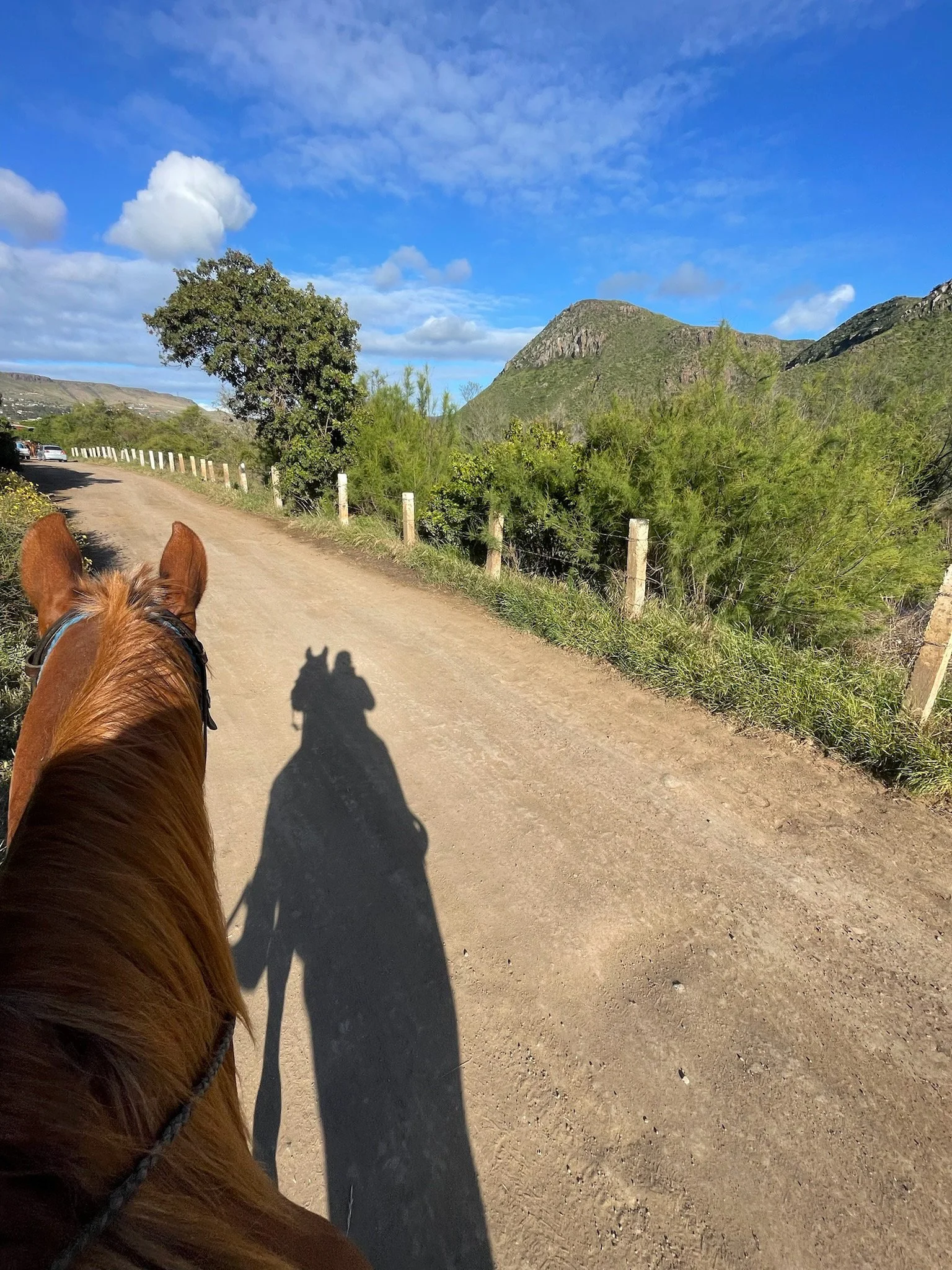
This is why my work with horses has been so profound. I didn't realize it at the time, but the physical, tactile act of riding and communicating with a horse is a mirror for this internal struggle. When I am with Fortuna, I cannot rely on "stage presence" or corporate charisma. I have to have a clear intent. I have to have something to "say" with my body and my energy.
The horse doesn't care about my performance; the horse cares about my presence. Reclaiming my agency with them has taught me that the voice I was afraid I’d lost wasn't gone—it was just waiting for me to be brave enough to use it.
If you’re interested in exploring how to "take the reins" in your own life, join us for our monthly workshop. We gather to practice the skills of presence and intentionality, learning together how to move through the world with a bit more clarity and a lot less fear.
