The Squirrel Syndicate (and other things stealing our eggs)
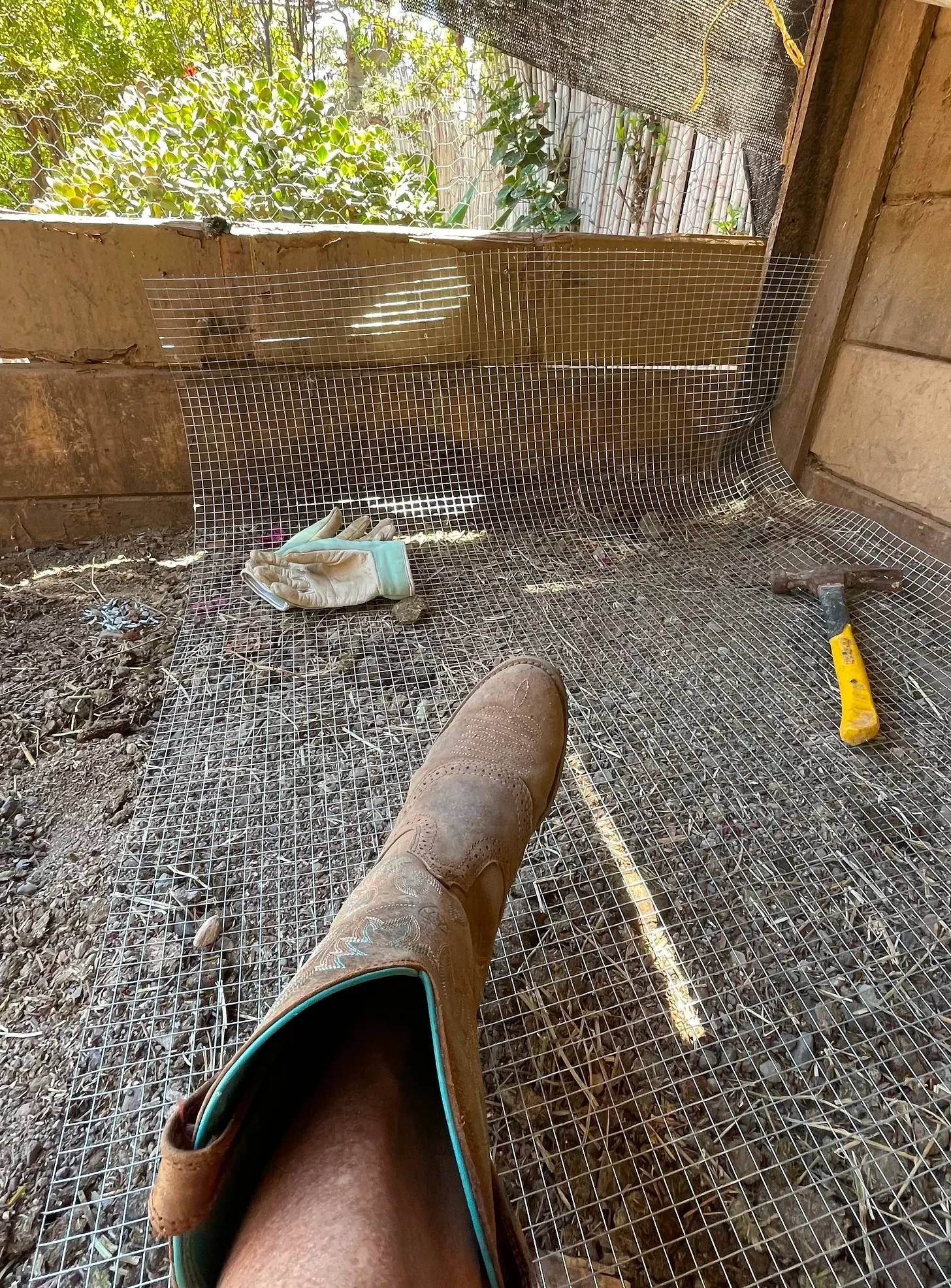
I thought I had solved the problem. But I thought wrong.
I thought I had patched up all the holes in my chicken coop so that the squirrel syndicate—now numbering at least five—couldn’t tunnel in and steal my eggs. Well, technically my chickens’ eggs, which I planned to steal from them, but which the squirrels were getting to first.
Only a few days after declaring victory over the coop (not unlike Charlie Sheen’s “I’m winning!” tirade), those same @%& squirrels were at it again. And once again—no eggs for me.
The cats tried to help, taking matters into their own paws and reducing the squirrel count by two. But even after the demise of those two, I still counted at least five squirrels at any given time, staked out like tiny snipers in different sections of my garden.
I really considered giving up and just buying eggs at the local Monday farmers market. But the reason I wanted chickens in the first place was to enjoy their fresh eggs—and to let them take care of my kitchen scraps.
So, I found myself in the middle of a situation that I thought I had already solved. I felt defeated. It felt a bit impossible, to be honest.
This Substack is reader-supported. To receive new posts and support my work, consider becoming a free or paid subscriber.
How could I patch all these holes? Every time I tried, another one appeared. It was like a game of whack-a-mole, but with holes in the chicken coop. (On second thought, maybe there’s a video game idea in there…?)
Finally, I came up with a plan—heavy-duty, small-mesh metal wire installed on the floor of the coop. Right over the top of the now-useless chicken wire, which had been buried under a layer of composted horse manure to give the chicks a nice surface to scratch on.
At the hardware store, I asked about the wire. It comes in rolls, not wide enough to cover the entire floor. I bought three 3-meter pieces and plastic ties to secure the overlapped sections in the middle.
I got it all home and proceeded to haul everything out of the coop: the waterers, the nesting boxes, and the large rocks I had previously used to patch the holes. Then, I laid the wire mesh along the floor and realized a glaring flaw: how am I going to attach this to the sides?
My plan had been to use small, flat-headed nails and a hammer, but it quickly became apparent that what I actually needed was a sort of baseboard along each side that I could press against the mesh wire and then secure to the frame of the coop.
I didn’t have any pieces of wood that size. I also didn’t have a saw to cut said wood.
That was when I realized: I needed help.
I thought I could do it on my own. I wanted to do it on my own. I am rather independent by nature. I wanted to believe I didn’t need anything or anyone. It turns out, I was wrong.
Right now, as I write this, I hear sounds coming from the chicken coop—hammering, sawing, drilling. Help has arrived, and the project is actually getting done.
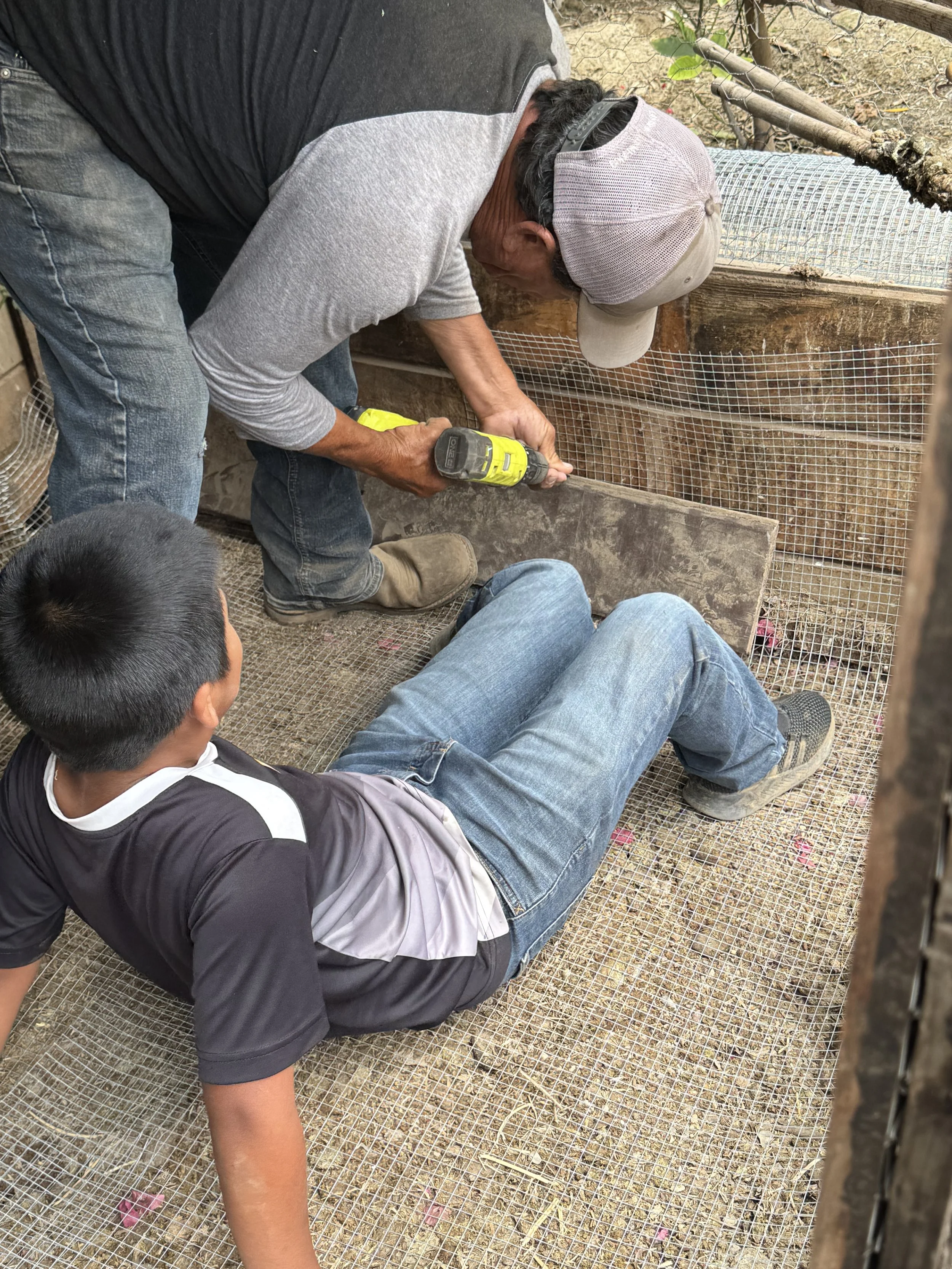
Why did I wait so long to ask?
All of those eggless days spent pondering, wondering, and considering... when I already knew the truth. I knew my chickens were laying. It wasn’t that they weren’t being productive; it was that their productivity was being hijacked.
Why is it so hard to realize? It’s not “cheating” to ask for help. It’s not weakness to admit we can’t do it alone. We don’t have to reinvent the wheel, and we don’t have to keep banging our heads against a brick wall.
What we need to do is listen—to listen to the inner knowing that says: it’s not that you are lacking life, it’s just that something is stealing that life away. And to be able to ask, “Can you help me with this?”
This Sunday, we begin The Return. Five weeks. Self-guided. Five practical, tangible practices that you can use when you need to “call for help” because you recognize that your own energy and agency are being hijacked.
These practices have helped me—and continue to help me—right in the midst of a life that often feels like a non-stop game of whack-a-mole.
If you are tired of trying to patch all the holes alone, I’d love to hand you some tools so you can move from patching the holes to enjoying the eggs.
