What If Doing Nothing is Actually Doing Something?
What if doing nothing is actually doing something?
I remember a paper I wrote for my high school American History class. I was comparing two US Presidents, ultimately deciding that the one who had "done something" was superior to the one who had "done nothing." My teacher, Mr. O’Hern, looked at my work with his characteristic gentle wisdom and simply commented: "Sometimes doing nothing is doing something." At the time, I didn't fully grasp his point, but the idea lodged itself in my mind.
The thing is, it’s true, isn’t it?
Take the Sabbath, for instance. The day of rest is one of the Ten Commandments—a "should" etched in stone. For a long time, I viewed the Sabbath more as a rule than a regalo (a gift). In our modern world, we don't give it much credence. We hear the story: on the seventh day God rested from the work of creation, and so too on the seventh day we are to "do nothing."
But what if doing nothing is actually the most vital thing we can do?
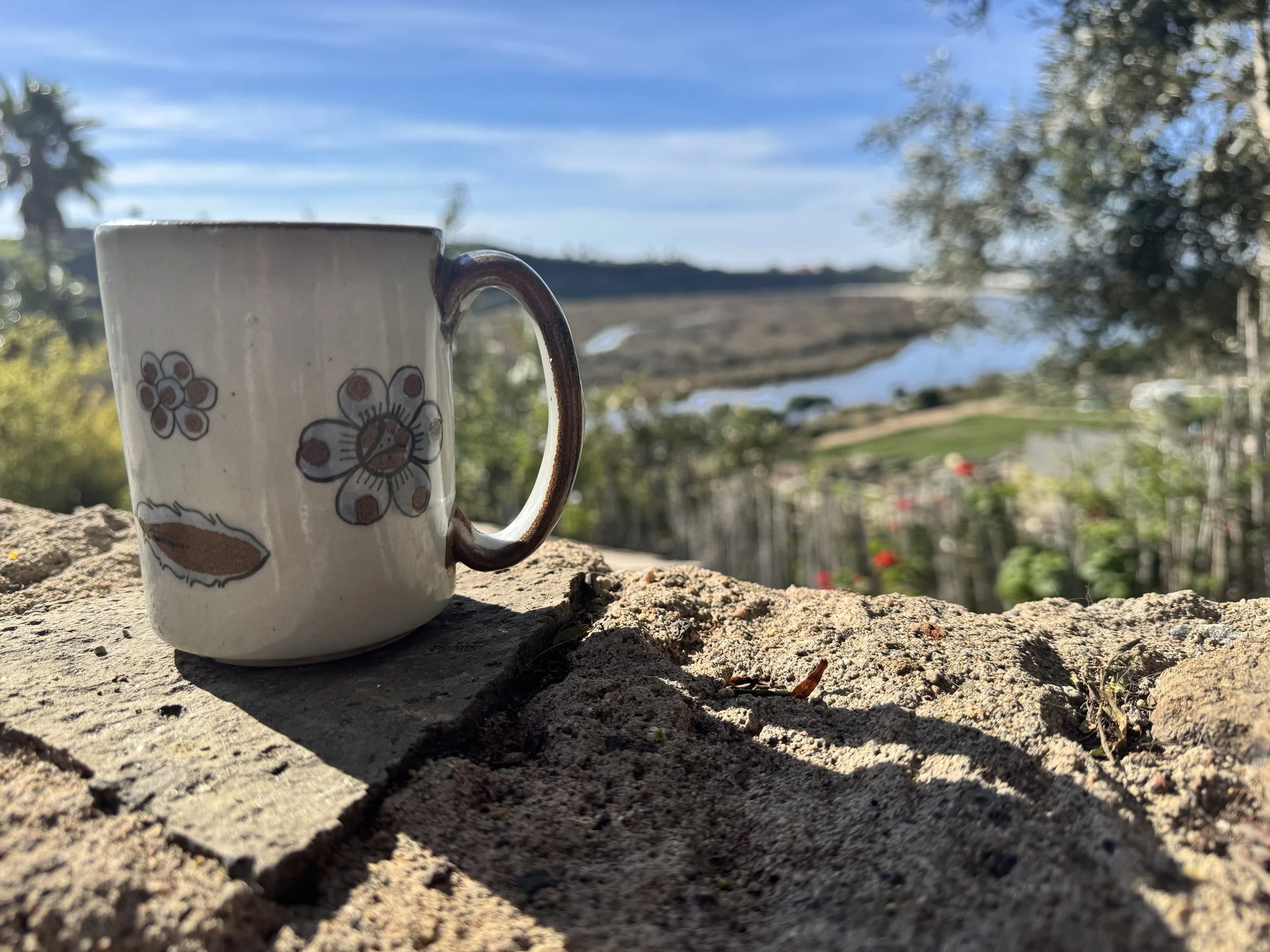
Each morning when I get up, one of my first rituals is to sit down—it used to be with coffee, now it’s lemon water—and set a timer for fifteen minutes. This is my "do nothing" time. Some might call it meditation or prayer, but at its most basic, it is a time to simply be. Sometimes I light a candle; sometimes I sit with the horses or look out from the patio as the rain falls. The mechanics don't matter as much as the practice: fifteen minutes of intentional emptiness.
Recently, I’ve noticed the friction of the week rubbing against this practice. On gym days, when the mornings are dark and I’m rushing to bike out the door by 7:00 AM, my fifteen minutes feels compressed. Even when I hit the time goal, I realize the settling is missing. Physically, I am still; mentally, I am already reviewing yesterday or rehearsing today. I am sitting, but I am not "doing nothing."
But this morning is Sunday. No gym, no work. A day of rest.
As I sat for thirty minutes on the patio, the air crisp and the sun just beginning to warm the air, I finally felt the shift I’d been missing all week. Both my body and my mind finally sunk into the "nothing."
Neal Allen, a wise friend and author, once mentioned to me that people often mistake "peace" for passivity. We assume that a state of peace is a "calm" that borders on the boring—a lack of energy or vitality. The truth is that the place of stillness is actually teeming with life. We just aren't usually still enough to notice it.
As I felt my mind settle this morning, I realized it is exactly like riding a horse.
Most people who come to ride with us are "top-heavy." They carry their center of gravity in their chest or their head. It is a precarious, unstable way to move. To be truly grounded and centered, a rider must allow their energy to sink down into what Traditional Chinese Medicine calls the Dantian—the core, just below the belly button.
You must literally feel your energy drain from the frantic thinking of the head and the tension of the chest, letting it settle into the gut. That sinking provides the stability. But the point of lowering your center is not to just "sit there." The point is to move forward from that place of power—to be able to choose the gallop down the beach and delight in the speed of it.
The place of stillness is what provides the basis for the movement. When we try to move without finding that core, the movement is out of rhythm. We bounce, we lose attunement with the horse, and we are easily unseated. If the horse is skittish or the terrain is rough, it is only by sinking into the core that the rider can direct that energy rather than being tossed around by it.
I wonder if life isn't the same?
In a world that feels increasingly "pear-shaped," our instinct is to stay in constant, frantic motion just to keep our heads above the rising tide of craziness. We feel we must "do something" to resist the chaos, but that movement often becomes a reactive game of whack-a-mole. We exhaust ourselves chasing the latest insanity, only to find our energy spent before the real work even begins.
What if the stillness is not an escape from reality, but the secret to navigating it with power?
Mr. O’Hern was right. Doing nothing is doing something. It is the act of lowering our center of gravity before we engage. The stillness isn't a retreat; it is the gathering of our forces. We sink down into the "nothing" so that when we do choose to move, we are not just reacting to the noise—we are moving with a grounded, sustainable strength that the chaos cannot unseat.
If you’re interested in exploring how to "take the reins" in your own life, join us for our monthly workshop. We gather to practice the skills of presence and intentionality, learning together how to move through the world with a bit more clarity and a lot less fear.
